1:1 Consultation
Alltite Radiofrequency Contouring for Face and Body at Mason Clinic
Alltite RF contouring at Mason Clinic in Seoul uses DLTD technology on the dermis and SMAS. Learn how it works, candidacy, shot tiers, and safety.
Mason Clinic · Medical Editorial & Clinical Insight
1:1 Consultation →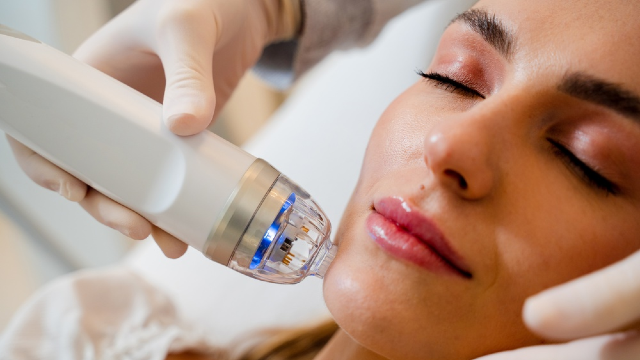
Alltite Radiofrequency Contouring for Face and Body at Mason Clinic
Medically reviewed by Dr. Hyunju Kim, Medical Director, Mason Clinic
If you have started to notice softer facial contours, a less defined jawline, or skin that feels less firm than it once did, you have probably come across a long list of non-surgical "lifting and tightening" devices. Many of them sound alike, and the marketing language rarely explains what actually happens to your skin during a session. This guide focuses on one radiofrequency (RF) treatment offered at Mason Clinic in Seoul, South Korea: Alltite. It is written to help you understand how the technology works, who tends to consider it, what a visit involves, and — just as importantly — what its regulatory status means for readers based in the United States.
Mason Clinic is a non-surgical dermatology and aesthetics practice in Seoul's Seocho-gu district, established in 2025, with a stated philosophy of building "enduring beauty upon a solid foundation." Alltite sits within the clinic's broader lifting and tightening category alongside other energy-based and thread-based options. Throughout this article you will see an emphasis on individualized assessment rather than one-size-fits-all promises, because that reflects how the clinic describes its own approach.
What Alltite Is
Alltite is a non-surgical treatment aimed at improving skin firmness and refining facial contours. It uses controlled radiofrequency energy combined with a proprietary technology the clinic refers to as DLTD to deliver heat into the skin's supportive layers.
At the device level, Alltite is a Korean-manufactured radiofrequency system made by Innoxus. Its patented DLTD® technology — an abbreviation for Dermis Layer Target Dielectric heating — is designed to deliver radiofrequency energy simultaneously to the dermis and the SMAS (superficial musculoaponeurotic system) layer. In doing so, it combines aspects of two familiar energy categories: radiofrequency, which heats tissue using electrical energy, and high-intensity focused ultrasound (HIFU), which targets deeper structural layers. A defining goal of the DLTD approach is to concentrate energy on these target layers while minimizing stimulation of the skin surface and the fat layer beneath. Because of that targeting, Alltite is positioned within the industry as a treatment intended to reduce the risk of facial hollowing that can be associated with some other lifting devices when the fat layer is over-treated.
The practical idea behind heating these deeper layers is straightforward. Controlled thermal energy is intended to prompt elastic fibers to contract and to encourage the skin's natural collagen-formation process. That combination is what the clinic describes as producing an immediate tightening effect, followed by more gradual improvement in skin texture and contour as the tissue responds over time.
It is worth stating clearly what Alltite is not. It is not surgery, it does not remove tissue, and it is not a weight-loss treatment. It is an energy-based procedure intended to support firmness and contour, with results that build progressively and vary from person to person.
How Radiofrequency Contouring Works on the Skin
To understand why a treatment like Alltite exists, it helps to understand what happens to skin over time. Skin laxity — the gradual loosening and sagging many people notice with age — is associated with a decline in the production of collagen and elastin, the two proteins that give skin its structure and springiness. As these proteins diminish, contours soften, the jawline can lose crispness, and the cheeks may feel heavier or less supported.
Radiofrequency devices address this by converting electrical energy into heat within the skin. When the deeper layers reach a controlled temperature, the body interprets this as a stimulus to repair and remodel. Existing collagen fibers can contract, producing a tightening effect that may be noticeable relatively soon after treatment, while a slower wound-healing-style response encourages the formation of new collagen over the following weeks and months. This is why energy-based lifting treatments are typically described as having two phases: an early tightening response and a gradual, longer-term improvement.
Different devices are engineered to deposit their energy at different depths and in different patterns, which is a large part of what distinguishes one system from another. Alltite's DLTD design is intended to reach both the dermis and the SMAS layer at once, which is the rationale behind marketing it for both facial refinement and body areas where firmness is a concern.
The Role of Precision Ultrasound Diagnosis at Mason Clinic
One feature that sets the clinic's process apart from a generic "RF facial" is what happens before any energy is delivered. Mason Clinic follows a diagnostic-first approach and states that no lifting or tightening treatment is administered without a pre-treatment precision ultrasound assessment. That assessment evaluates three things in the areas being considered for treatment: skin thickness, fat-layer depth, and the condition of the muscle layer.
This matters because energy-based devices interact with tissue differently depending on how thick the skin is and how the fat and muscle layers are distributed. By mapping the individual anatomy first, the clinic aims to select the appropriate modality and calibrate treatment parameters — including energy settings — to the patient's actual tissue depth rather than to a standardized template. The clinic notes that Dr. Hyunju Kim personally conducts the ultrasound diagnostics, designs the individualized protocol, and calibrates the treatment energy accordingly. Consultations may be conducted directly by the clinic director when requested.
Dr. Kim is documented as a designated Alltite Key Doctor. As Mason Clinic's Medical Director, she oversees the diagnostic and treatment-planning process described here. It is this pairing of anatomical assessment with individualized planning that the clinic emphasizes rather than any promise of a fixed, guaranteed result.
Who Tends to Consider Alltite
Alltite may be considered by individuals concerned with skin laxity, reduced elasticity, or a loss of facial definition, as well as by those interested in non-surgical facial slimming and contour refinement. The clinic also notes that it may be considered by people looking for an alternative approach after seeing limited results from previous laser treatments.
More broadly, patients who research non-surgical lifting and tightening tend to share a few motivations. They want firmer, more youthful-looking skin without the incisions, general anesthesia, and extended recovery that surgery involves. They value treatment plans matched to their own tissue rather than a template, and they generally prefer natural-looking results over dramatic or overcorrected changes.
Candidacy, however, is not something you can confirm from an article. Whether Alltite — or any single modality — is appropriate for you depends on your individual tissue profile as identified through the ultrasound assessment, your goals, and your medical history. Some individuals are better suited to a different modality or to a combination of treatments. That determination is made in person. This guide is educational and is not a self-diagnosis tool.
What a Session Involves
Mason Clinic describes a structured, multi-step process for Alltite that reflects its diagnostic-first philosophy:
- Consultation. Your concerns and suitability are assessed, and your goals for the treatment are discussed. A director-level consultation may be requested.
- Ultrasound diagnosis. Skin thickness, fat-layer distribution, and muscle-layer structure are evaluated to support individualized planning.
- Preparation. Professional cleansing and preparatory care are performed by trained staff. Patients are not asked to self-cleanse.
- Pain control. A multi-step comfort system may be used. Depending on the plan, this can include PRESS device technology, numbing cream with enhanced absorption, microneedles where appropriate, analgesic injections, and nerve block anesthesia when required.
- Alltite treatment. Radiofrequency energy is applied to the targeted areas using parameters adjusted according to the diagnostic findings.
- Aftercare. Professional post-treatment care and guidance are provided, tailored to your treatment to support recovery conditions.
Treatment takes place in a private, in-room care environment. The clinic also highlights the use of authenticated equipment, verified products, and photographic documentation of dosing — including recorded shot counts — as part of its process management.
Understanding the Shot-Count Tiers
Alltite at Mason Clinic is offered in shot-count tiers, and understanding this concept is useful when you plan a consultation. In energy-based treatments, a "shot" refers to a single delivery of energy, so the total shot count is one way to describe the scope of a session and how much of an area can be addressed.
Alltite is documented in tiers of 400 shots and 600 shots, and these tiers are offered for both face and body applications. A higher shot count generally corresponds to a larger or more comprehensively treated area. The appropriate tier for you is not something to decide from a webpage; it depends on the areas being treated and the plan developed from your ultrasound assessment.
This article does not list prices. Cost for energy-based contouring is influenced by qualitative factors such as the shot count, the size and number of areas treated, and how many sessions are planned over time. For specific pricing, payment options, and scheduling, contact Mason Clinic directly. Payment details are best confirmed with the clinic.
How Alltite Fits Among the Clinic's Other Lifting Options
Mason Clinic offers several lifting and tightening modalities that target different tissue depths, and they are not interchangeable. The clinic's category includes focused-ultrasound and radiofrequency-based options as well as thread-based treatments, each engineered for a particular purpose. Ultherapy Prime, for example, uses focused ultrasound to reach deeper structural layers including the SMAS; radiofrequency-based options such as Thermage FLX and Coolfase heat the skin to encourage collagen remodeling; and thread lifting uses dissolvable threads for tissue repositioning and collagen stimulation.
Alltite's distinguishing feature is its DLTD radiofrequency approach designed to reach the dermis and SMAS simultaneously while limiting stimulation of the surface and fat layers. Because the clinic's diagnostic-first process allows treatments to be selected — and sometimes combined — based on ultrasound findings, the most useful takeaway is not "which device is best" in the abstract, but which approach matches your individual tissue and goals.
Regulatory Status: Important Context for US Readers
This is essential for anyone reading from the United States. Alltite is a Korean-manufactured device and is not cleared by the U.S. Food and Drug Administration (FDA) for the cosmetic uses described here. It is offered at Mason Clinic in Seoul under local regulation. Clearance or approval by regulators outside the United States is not the same as U.S. FDA clearance, and nothing in this article should be read to imply that Alltite is FDA-cleared.
For category context, the FDA does clear certain radiofrequency devices used for aesthetic purposes through its 510(k) process. Thermage FLX, a separate fourth-generation radiofrequency system, is one example of an RF device that carries U.S. FDA clearance for non-invasive treatment of facial wrinkles. That is offered here only to illustrate how the FDA regulates the radiofrequency category — it does not extend to Alltite, which does not carry that clearance.
If you are based in the United States and are weighing similar firmness or contouring goals closer to home, consult a U.S.-licensed provider about treatments that are FDA-cleared or FDA-approved for your specific concern.
Realistic Outcomes, Risks, and Side Effects
Mason Clinic describes potential benefits of its lifting and tightening treatments in terms of improved skin firmness, lifting of sagging tissue, improved facial contours, collagen regeneration, improved elasticity, and refined skin texture. For Alltite specifically, the emphasis is on an immediate tightening effect followed by gradual improvement in texture and contour. The clinic consistently frames outcomes as natural-looking rather than standardized, and results vary from one person to another. No energy-based treatment offers a guaranteed or permanent result.
As with any energy-based skin treatment, there are risks and possible side effects to discuss during consultation. Common, generally temporary reactions after radiofrequency treatments can include redness, mild swelling, or tenderness in the treated area. Less commonly, energy-based devices carry a risk of burns or effects on nearby nerves. The specific risks that apply to you, along with any reasons a treatment might not be suitable, should be reviewed with the clinic before you proceed. This is one more reason the pre-treatment assessment and an in-person conversation matter.
Bottom Line
Alltite is a Korean-manufactured radiofrequency treatment that uses patented DLTD technology to deliver energy to the dermis and SMAS layer at once, aiming for an immediate tightening effect and gradual improvement in skin texture and contour while limiting stimulation of the surface and fat layers. At Mason Clinic in Seoul, it is delivered through a diagnostic-first process built around a pre-treatment ultrasound assessment, with Dr. Hyunju Kim — a designated Alltite Key Doctor and the clinic's Medical Director — overseeing individualized planning. It is offered in 400- and 600-shot tiers for face and body. For U.S. readers, the most important point is regulatory: Alltite is not FDA-cleared and is offered in Korea under local regulation. Results vary, no outcome is guaranteed, and whether it suits you can only be determined through an in-person consultation and ultrasound assessment.
Frequently Asked Questions
**Is Alltite FDA-cleared in the United States?**No. Alltite is a Korean-manufactured device and is not cleared by the U.S. FDA for these cosmetic uses. It is offered at Mason Clinic in Seoul under local regulation. Certain other radiofrequency devices, such as Thermage FLX, do carry U.S. FDA clearance, but that clearance does not apply to Alltite.
**What does DLTD technology actually do?**DLTD stands for Dermis Layer Target Dielectric heating. It is designed to deliver radiofrequency energy to the dermis and SMAS layer simultaneously while minimizing stimulation of the skin surface and the fat layer, with the aim of supporting elastic fiber contraction and collagen formation.
**Is Alltite for the face, the body, or both?**It is offered for both face and body. Mason Clinic documents Alltite in 400-shot and 600-shot tiers for face and body applications. The appropriate tier and treatment areas are determined during consultation based on your ultrasound assessment.
**Will I see results immediately?**The clinic describes an immediate tightening effect along with gradual improvement in skin texture and contour that develops over time as the tissue responds. Results vary between individuals, and no specific outcome or longevity is guaranteed.
**Does the treatment hurt?**Comfort varies by person and by treatment plan. Mason Clinic describes a multi-step pain-control system that may include a PRESS device, numbing cream with enhanced absorption, microneedles, analgesic injections, and nerve block anesthesia when needed. The clinic does not promise a pain-free experience.
**How do I know if I am a good candidate?**Candidacy depends on your individual tissue profile, goals, and medical history, and it is assessed in person. Mason Clinic uses a precision ultrasound evaluation of skin thickness, fat-layer depth, and muscle-layer condition before recommending any lifting or tightening treatment.
Disclaimer
This article is intended for general education only. It is not medical advice and is not a self-diagnosis tool. It does not establish a doctor–patient relationship. Determining whether Alltite or any treatment is appropriate for you requires an in-person consultation and precision ultrasound assessment at the clinic, where your individual anatomy, goals, and medical history can be evaluated. Results vary from person to person, no outcome is guaranteed, and all procedures carry potential risks and side effects that should be discussed with a qualified provider. For questions about pricing, payment, scheduling, or your specific situation, contact Mason Clinic directly.
Clinical Safety Notice & Personalized Consultation
All treatments across Mason Clinic's specialized clinical centers are planned after a 1:1 consultation with our attending physicians. Individual outcomes vary depending on skin anatomy and condition. Possible post-procedure effects include temporary redness, swelling, bruising, tenderness, or infection.
Request a 1:1 ConsultationClinical Safety Notice & Personalized Consultation
All treatments across Mason Clinic's specialized clinical centers are planned after a 1:1 consultation with our attending physicians. Individual outcomes vary depending on skin anatomy and condition. Possible post-procedure effects include temporary redness, swelling, bruising, tenderness, or infection.
Request a 1:1 Consultation