1:1 Consultation
Ultrasound ViewTox vs Traditional Botox: Precision-Guided vs Standard Injection
How Mason Clinic's ultrasound-guided ViewTox method compares with standard botulinum toxin injection, explained with honest regulatory and safety context.
Mason Clinic · Medical Editorial & Clinical Insight
1:1 Consultation →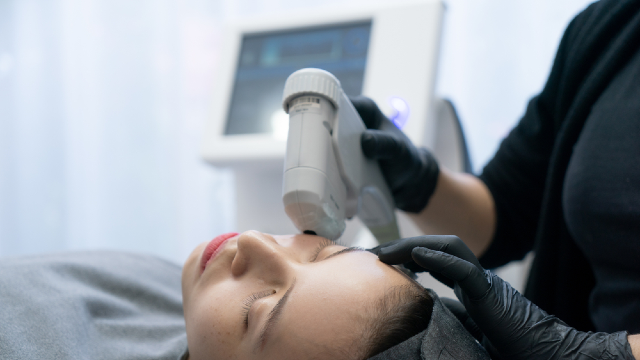
Ultrasound ViewTox vs Traditional Botox: Precision-Guided vs Standard Injection
Medically reviewed by Dr. Hyunju Kim, Medical Director, Mason Clinic
Botulinum toxin injections have become one of the most familiar aesthetic treatments in the world, and most people picture them the same way: a clinician marks a few points on the face and injects. That mental image describes traditional, landmark-based injection, and it has been the standard approach for decades. More recently, some clinics have begun using real-time ultrasound imaging to guide the same injections, and Mason Clinic in Seoul offers this as a method it calls Ultrasound ViewTox. If you are researching ultrasound-guided Botox in Seoul or trying to understand what "precision Botox" actually means, this guide walks through how the two approaches differ, what the imaging is designed to add, and, just as importantly, where the regulatory and safety lines really sit.
Before going further, one point needs to be clear, because it is easy to get wrong. This article is educational and is not a self-diagnosis tool. It cannot tell you which approach is right for you, whether you are a candidate for either, or what dose or muscles would be involved. Those are individual medical questions that belong in an in-person consultation. Botulinum toxin is a prescription medical treatment with real effects and real risks, results vary from person to person, and nothing here is a promise of a particular outcome. With that established, let us look at how standard injection and ultrasound-guided injection compare.
What "Traditional" Botox Injection Actually Is
Traditional botulinum toxin injection is sometimes called landmark-based or anatomy-based injection. The clinician relies on their knowledge of facial anatomy, visual inspection of how your muscles move, and manual palpation to decide where to place each injection. For many well-mapped areas of the upper face, this approach is long established, and experienced injectors develop a detailed working sense of where the target muscles typically lie.
It helps to separate two different things that often get blended together in casual conversation. The first is the toxin product itself, for example Allergan Botox, whose active ingredient is onabotulinumtoxinA. The second is the technique used to deliver it. Traditional injection and ultrasound-guided injection are both delivery techniques; they can use the same underlying product. So when we compare ViewTox with "traditional Botox," we are really comparing two ways of guiding where the needle goes, not two different drugs.
This distinction matters for understanding regulatory status, which we will return to in detail. In the United States, the botulinum toxin product is FDA-approved for specific, named uses. The technique used to deliver it, whether by anatomical landmarks or by ultrasound guidance, is a matter of clinical practice rather than a separate product with its own FDA approval. Keeping the product and the technique mentally separate is the single most useful habit for reading any "precision Botox" marketing critically.
What Ultrasound ViewTox Is Designed to Do
Mason Clinic describes Ultrasound ViewTox as a precision-focused botulinum toxin treatment that uses real-time ultrasound imaging to guide injections. According to the clinic's own documentation, the technique allows the practitioner to visualize muscles, salivary glands, blood vessels, and surrounding structures before and during treatment. The stated intent is a more targeted approach based on the individual's facial anatomy, muscle activity, and structural concerns, rather than relying on external landmarks alone.
In practical terms, the clinic outlines a sequence roughly like this. The treatment area is first assessed and prepared. Ultrasound imaging is then used to identify the relevant muscles, salivary glands, blood vessels, and nearby structures. The practitioner analyzes muscle size, movement patterns, and the balance between the two sides of the face. From that, appropriate injection points and dosage are determined, and the toxin is administered into the intended target areas under ultrasound guidance. Post-treatment care and individualized guidance follow. The clinic frames the underlying treatment principle as injecting precisely where needed and only in the amount necessary, with the aim of avoiding excessive muscle relaxation and supporting balanced, natural-looking results.
Mason Clinic pairs this with its broader diagnostic-first philosophy. Before treatment, ultrasound may also be used to evaluate skin thickness, fat layers, muscle layers, muscle size, movement patterns, and structural symmetry. The assessment is meant to help determine whether a given concern is related to muscle, fat, glandular structures, or other anatomical factors. Patients who request it can have their consultation conducted directly by the clinic's medical director, Dr. Kim.
The Claimed Rationale for Ultrasound Guidance
Why add imaging to a procedure that is often done without it? The rationale the clinic describes is essentially about visualization. Facial anatomy is not identical from one person to the next. Muscles vary in size, thickness, and exact position; blood vessels and salivary glands sit near some injection zones; and asymmetry between the left and right sides is common. Traditional landmark injection handles this variability through the injector's training and tactile judgment. Ultrasound guidance is presented as a way to see some of those structures directly in real time rather than inferring their location.
For certain areas this rationale is more intuitive than others. The masseter, the large chewing muscle at the jaw angle that is sometimes treated to soften a square lower-face contour, varies considerably in thickness between individuals, which is why masseter Botox with ultrasound guidance is a frequently discussed use of imaging. Areas near salivary glands or notable vasculature are others where being able to visualize the structure is put forward as a benefit. Mason Clinic lists candidates for ViewTox as including people seeking improvement in facial contour, muscle-related facial volume, or asymmetry, those with enlarged masseter muscles or salivary gland enlargement, patients with muscle imbalance, and, notably, people who have had previous unsatisfactory botulinum toxin results or side effects and want a more precise, controlled approach that preserves natural facial expression.
It is important to state the rationale neutrally rather than overselling it. The clinic presents ultrasound guidance as a technique intended to support more accurate placement and individualized dosing. That is a reasonable description of the goal. It is a different thing from a guarantee that any given result will be better, safer, or free of complications, and this article does not make that leap. Whether imaging adds meaningful value in a specific case depends on the area being treated, the individual's anatomy, and the clinician's judgment, all of which are consultation-level questions. Every injection technique, guided or not, carries potential risks, and no method removes them.
The Regulatory Picture, Stated Precisely
This is the part that deserves the most care, because it is where confident-sounding claims most often go wrong. Here is the honest breakdown for readers in the United States.
The botulinum toxin product, such as Allergan Botox (onabotulinumtoxinA), is FDA-approved for specific on-label indications. On the cosmetic side, those approved uses are moderate-to-severe glabellar lines (the vertical frown lines between the brows), lateral canthal lines (crow's-feet), and forehead lines. The same active ingredient also has separate therapeutic approvals for conditions such as severe underarm sweating (axillary hyperhidrosis) and chronic migraine, among others. When a treatment uses the product for one of these labeled purposes, describing that product as FDA-approved is accurate.
Ultrasound guidance is a delivery technique, and it is not separately FDA-approved. There is no FDA approval that attaches to "injecting under ultrasound" as such. Equally important, "ViewTox" as a branded method is not an FDA-cleared or FDA-approved product. So the correct framing is this: the underlying toxin's FDA approval covers its labeled indications, and ultrasound-guided delivery is simply a technique the clinic uses when administering it. It would be inaccurate to say that the ViewTox method itself is FDA-approved or FDA-cleared, and you should be cautious of any source that implies otherwise.
There is a further wrinkle around what the toxin is used for. Using botulinum toxin for purposes outside its labeled indications is considered off-label. Off-label use is common and legal in medical practice, but it should be named honestly. In particular, so-called "skin botox" or micro-toxin approaches, where very dilute toxin is used across an area with the aim of refining pores, texture, or oil, are off-label uses; the product's FDA approvals do not cover treating pore appearance or skin texture. Mason Clinic's broader botulinum toxin offering does describe a skin-focused application intended to address pore appearance, texture, fine lines, elasticity, and radiance, and it is fair to understand any such use as off-label rather than an approved indication. None of this means off-label treatment is inappropriate; it means the labeling distinction is something you are entitled to understand before consenting.
To summarize the regulatory status plainly: the toxin product is FDA-approved for its named indications; ultrasound guidance and the ViewTox method are not themselves FDA-approved or cleared; and micro-toxin or "skin botox" uses fall outside the approved indications and are off-label. Regulatory pathways also differ by country, and any approval a product or method may hold in Korea or elsewhere is not equivalent to US FDA approval.
Comparing the Two Approaches Point by Point
With the product-versus-technique distinction and the regulatory picture in hand, here is how ultrasound-guided ViewTox and traditional landmark-based injection compare on the dimensions patients tend to ask about.
How placement is decided. Traditional injection relies on anatomical knowledge, visual assessment of muscle movement, and palpation. ViewTox adds real-time ultrasound so that muscles, glands, and vessels can be visualized during the procedure, with dosing and points chosen from what the imaging and analysis show.
Individualization. Both approaches can be individualized, but the clinic positions ViewTox around per-patient anatomical mapping, including muscle size, movement patterns, and left-to-right balance, with the stated aim of using only the amount of toxin necessary.
Typical use cases discussed. Landmark injection is well established for many upper-face expression lines. Ultrasound guidance is most often highlighted for areas where anatomy varies or sits near sensitive structures, such as the masseter for lower-face contouring, or where a patient has had an unsatisfactory prior result and wants a more controlled re-approach.
The product used. This can be the same in both cases. The comparison is about guidance method, not about a different drug.
What neither can promise. Neither approach guarantees a specific outcome, and both carry the potential side effects inherent to botulinum toxin injection. Ultrasound guidance is presented as a technique to support precision; it is not a guarantee of a superior or risk-free result.
Onset, Duration, and the Temporary, Non-Reversible Nature of Toxin
Whichever technique is used, the fundamental behavior of botulinum toxin is the same, and understanding it is central to setting expectations. For its ViewTox treatment, Mason Clinic notes that initial effects typically appear within about three to seven days, and that results generally last roughly three to six months, with duration varying according to individual muscle characteristics and lifestyle factors. More broadly, botulinum toxin effects are temporary, commonly described in the range of about three to four months for cosmetic use, after which the effect gradually wears off and repeat treatment would be needed to maintain it.
There is an honest corollary that patients considering any toxin treatment should hear: once botulinum toxin has been injected, its effect cannot simply be reversed on demand. If a result is not what someone hoped for, it generally has to be waited out as the effect fades over the coming months, rather than dissolved or undone. This is one reason careful, conservative planning and individualized dosing matter, and it is part of why some patients with a prior unsatisfactory result are drawn to a more measured re-approach. It is also a reason to be realistic before treatment rather than to expect that any misstep can be quickly corrected.
How a Suitable Approach Is Decided at Mason Clinic
The clinic's consistent theme is individualization through assessment rather than a one-technique-fits-all rule. A ViewTox consultation begins with a discussion of your concerns and goals, followed where appropriate by ultrasound evaluation of the relevant structures, so the plan can be built around what the imaging actually shows about your anatomy. The findings help determine whether a concern stems from muscle activity, glandular structures, fat, or other factors, which in turn shapes whether and how toxin would be used. Comfort is planned as well: the clinic describes a pain-minimized system that may include advanced PRESS devices, enhanced absorption of anesthetic cream, microneedle techniques, analgesic injections, and nerve-block anesthesia, with the specific measures selected for the individual and the plan.
Mason Clinic also emphasizes transparency in how it handles the injectable itself, describing genuine products being opened in front of the patient with photographic documentation of dosing as part of its standard practice. None of these process features change the underlying regulatory facts, but they are relevant to what a visit involves. What a consultation cannot do is promise a result, and the appropriate answer for many people may be that a standard, well-executed injection is entirely reasonable for their concern, that ultrasound guidance is worth considering for a particular area, or that toxin is not the right tool at all. That determination is exactly what an in-person evaluation is for.
Bottom Line
The comparison between Ultrasound ViewTox and traditional botulinum toxin injection is, at its core, a comparison of two delivery techniques rather than two different medications. Traditional injection uses anatomical landmarks, visual assessment, and palpation; ViewTox adds real-time ultrasound imaging that Mason Clinic uses to visualize muscles, salivary glands, blood vessels, and surrounding structures and to inform individualized placement and dosing. The claimed rationale, better visualization of variable anatomy, is reasonable to consider, especially for areas like the masseter or for patients revisiting an unsatisfactory prior result, but it is a technique intended to support precision, not a guarantee of a better or safer outcome.
On regulation, the honest summary is this: the toxin product is FDA-approved for its specific labeled uses such as glabellar lines, crow's-feet, and forehead lines; ultrasound guidance is not separately FDA-approved; the "ViewTox" method is not an FDA-approved or FDA-cleared product; and micro-toxin or "skin botox" uses for pores and texture are off-label. Toxin effects are temporary and cannot be reversed once injected, so conservative, individualized planning matters. Results vary, risks are real, and no approach is guaranteed. The productive next step is an individualized consultation, not a decision made from an article.
Frequently Asked Questions
**Is Ultrasound ViewTox a different drug from regular Botox?**No. ViewTox refers to a delivery technique that uses real-time ultrasound to guide injection, not a different medication. The underlying botulinum toxin product can be the same one used in traditional injection. The comparison is about how placement and dosing are guided, not about which drug is in the syringe.
**Is ultrasound-guided Botox FDA-approved?**The botulinum toxin product is FDA-approved for its specific labeled indications, such as glabellar lines, crow's-feet, and forehead lines. Ultrasound guidance is a technique and is not separately FDA-approved, and "ViewTox" as a branded method is not an FDA-cleared or FDA-approved product. Regulatory status also differs by country, and approvals held elsewhere are not equivalent to US FDA approval.
**Does using ultrasound make Botox safer?**Mason Clinic presents ultrasound guidance as a way to visualize anatomy and support more targeted placement and dosing. That is a rationale, not a guarantee. Every injection technique carries potential risks, and no method eliminates them. Whether imaging adds meaningful value in your specific case is a question for an in-person consultation.
What is "skin botox," and is it approved?"Skin botox" or micro-toxin generally refers to using very dilute toxin over an area to address pore appearance, texture, or oil. These uses fall outside the product's FDA-approved indications and are therefore off-label. Off-label treatment is a common part of medical practice, but you should understand the distinction and discuss it with the clinician.
**How long do results last, and can they be undone?**For ViewTox, the clinic notes initial effects typically within about three to seven days and results lasting roughly three to six months, varying by individual. Botulinum toxin effects are temporary and wear off over time. Importantly, once injected, the effect cannot simply be reversed on demand; an unsatisfactory result generally must be waited out as it fades, which is why careful planning matters.
**I had an unsatisfactory Botox result before. Is ViewTox a fix?**The clinic lists people with previous unsatisfactory results among those who consider ViewTox for a more controlled approach, but no treatment can be promised as a fix, and prior effects still have to wear off on their own timeline. Whether a more measured re-approach makes sense for you depends on an individualized assessment. This article is educational and not a self-diagnosis tool.
Disclaimer
This article is for general education only and is not a self-diagnosis tool or a substitute for professional medical advice. Botulinum toxin is a prescription treatment, and individual candidacy, technique selection, dosing, and suitability require an in-person consultation and, where appropriate, ultrasound assessment at the clinic. Results vary between individuals and are not guaranteed, and every injection carries potential risks and side effects that should be discussed with a qualified clinician. Regulatory status differs by country: the toxin product is FDA-approved only for its specific labeled indications, ultrasound guidance and the ViewTox method are not themselves FDA-approved or cleared, and some uses discussed here are off-label. Please consult Mason Clinic or a qualified physician directly with your specific questions.
Clinical Safety Notice & Personalized Consultation
All treatments across Mason Clinic's specialized clinical centers are planned after a 1:1 consultation with our attending physicians. Individual outcomes vary depending on skin anatomy and condition. Possible post-procedure effects include temporary redness, swelling, bruising, tenderness, or infection.
Request a 1:1 ConsultationClinical Safety Notice & Personalized Consultation
All treatments across Mason Clinic's specialized clinical centers are planned after a 1:1 consultation with our attending physicians. Individual outcomes vary depending on skin anatomy and condition. Possible post-procedure effects include temporary redness, swelling, bruising, tenderness, or infection.
Request a 1:1 Consultation