1:1 Consultation
Thread Lifting vs Sofwave: Which Non-Surgical Lift Fits Your Concern
How thread lifting and Sofwave differ in mechanism, downtime, and use case, with honest regulatory context, to help you prepare for a Seoul consultation.
Mason Clinic · Medical Editorial & Clinical Insight
1:1 Consultation →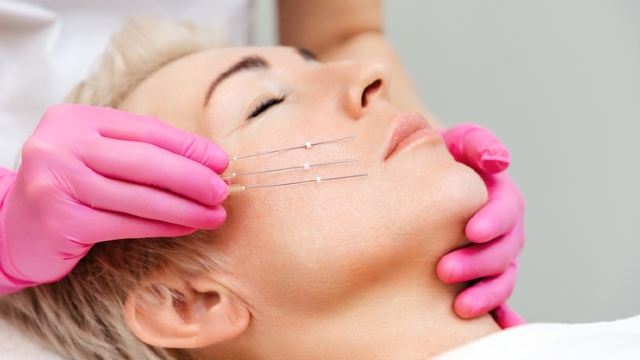
Thread Lifting vs Sofwave: Which Non-Surgical Lift Fits Your Concern
Medically reviewed by Dr. Hyunju Kim, Medical Director, Mason Clinic
When facial contours start to soften, most people would prefer to address the change without surgery if they reasonably can. Two very different non-surgical options come up often in that conversation: thread lifting, which physically repositions tissue using absorbable threads, and Sofwave, an ultrasound-based treatment that stimulates collagen in the skin. They are sometimes discussed as if they were interchangeable, but they work in fundamentally different ways and tend to suit different concerns. This guide compares thread lifting and Sofwave as documented at Mason Clinic in Seoul, focusing on mechanism, the kind of concern each is built for, downtime, and the honest regulatory picture, so you can walk into a consultation with sharper questions.
One thing to settle at the outset: this article is educational and is not a self-diagnosis tool. It cannot tell you which treatment, if either, is right for you, because that depends on an individual assessment of your skin, fat, and muscle layers that only an in-person evaluation can provide. There is no universally "best" option here, results vary from person to person, and neither treatment is surgery or a substitute for it. What follows is meant to clarify how the two approaches differ, not to pre-select one for you.
Two Different Ideas About What a "Lift" Means
The clearest way to understand these treatments is to notice that they answer the aging-face problem with two different strategies.
Thread lifting is a mechanical approach. Mason Clinic describes it as a non-surgical procedure that improves skin elasticity and restores facial contours by lifting and supporting tissue from within the skin. Specialized absorbable threads are placed beneath the skin to reposition sagging tissue, improve firmness, and support natural-looking contour enhancement. In other words, the threads physically hold and reposition tissue, and there is a secondary benefit as well: as the threads are gradually absorbed by the body, they stimulate a collagen response in the surrounding tissue. So thread lifting combines an immediate structural effect with a longer, collagen-based one.
Sofwave is an energy-based approach. Mason Clinic describes it as an ultrasound-based lifting treatment that stimulates collagen within the skin to improve overall firmness. At the clinic, it targets the dermal layer at approximately 1.5 mm to support tightening and lifting without downtime. Sofwave uses focused ultrasound energy (the underlying technology is referred to as SUPERB ultrasound) directed at that mid-dermal depth, delivering targeted dermal stimulation and prompting collagen activation without disrupting the skin's surface. There is no physical repositioning of tissue; the "lift" comes from the skin's own collagen response to the energy over time.
Holding onto that single distinction, mechanical repositioning versus energy-based collagen stimulation, makes almost everything else about the comparison easier to reason through.
How Thread Lifting Works and Who It Tends to Suit
With thread lifting, threads are introduced beneath the skin and positioned to support and reposition areas that have begun to descend. Because the action is partly structural, the clinic describes an immediate visible lifting effect together with continued improvement in skin texture and elasticity over time as collagen responds to the absorbable material. It is a two-part benefit: something you can see relatively soon from the mechanical support, and a gradual refinement that follows.
Mason Clinic documents thread lifting as suited to patients with early to moderate signs of aging or loss of skin support. Specifically, the clinic lists general loss of facial elasticity, sagging cheeks, mid-face volume descent, weakened jawline definition, loss of V-line contour, fine lines, and mild wrinkles among the concerns it can address. That profile points toward people who are noticing that facial tissue has started to shift or droop and who want some degree of repositioning, not just surface tightening. The clinic's threads include an option referred to as Jamber, among others offered at the Seoul location.
The clinic emphasizes that its approach favors precise, individualized planning over excessive correction. Treatment is based on ultrasound assessment of the patient's anatomy and aims to restore balance, contour, and elasticity while respecting natural features, rather than pursuing a dramatic or overcorrected look. As with all of the clinic's lifting work, a precision ultrasound diagnosis of skin thickness, fat distribution, and muscle structure informs the plan, and a director-led consultation is available on request.
How Sofwave Works and Who It Tends to Suit
Sofwave takes the energy route. Focused ultrasound is delivered to roughly the 1.5 mm dermal layer, where it is intended to activate collagen and, over time, improve firmness and produce a tightening and lifting effect. Because the energy is concentrated in the mid-dermis and the surface is not physically manipulated, the clinic notes that the treatment is designed to work without downtime. The result develops gradually as collagen responds; there is no mechanical repositioning to produce an immediate structural change in the way threads do.
Mason Clinic lists Sofwave as suited to individuals with early to moderate skin laxity. The documented concerns include fine lines and wrinkles around the eyes or forehead, sagging cheeks, deepening nasolabial folds, early jowl formation, and under-chin laxity. The clinic is explicit that Sofwave is intended to address early to moderate laxity rather than to provide a surgical-level lifting result. That framing is important: it positions Sofwave as a firmness-and-tightening treatment for skin that has softened, not as a tool for advanced sagging.
The Sofwave visit follows the clinic's standard diagnostic-first pattern: a consultation to review concerns, an ultrasound assessment of the skin and underlying structures, professional cleansing of the treatment area, application of the Sofwave ultrasound energy according to the individualized plan, and professional aftercare. Director consultation is available on request, and follow-up and personalized skin management are described as part of continuity of care.
The Regulatory Picture, Stated Precisely
This is where accuracy matters most for readers in the United States, because the two treatments do not sit in the same regulatory position, and it would be misleading to imply that they do.
Sofwave is US-FDA-cleared. Its clearance covers improving the appearance of facial lines and wrinkles, and lifting the eyebrow and lax submental (under-chin) and neck tissue, for adults aged 22 and older. (Sofwave also received a separate clearance related to the short-term improvement in the appearance of cellulite.) When you see Sofwave described as FDA-cleared, that is accurate for those specific indications.
Thread lifting, as a category, is more nuanced. Some thread-lifting devices do hold US FDA clearance. However, the specific threads used at Mason Clinic, including Jamber, are not documented as US-FDA-cleared. The honest way to frame this is that thread lifting is offered at the clinic's Seoul location, and you should not assume that the particular thread product used there carries US FDA clearance simply because thread lifting as a category includes some cleared devices. A clearance held by one device does not transfer to another, and clearances granted in other countries are not equivalent to US FDA clearance.
So the plain summary is: Sofwave is US-FDA-cleared for the indications noted above; the clinic's specific threads such as Jamber are not documented as US-FDA-cleared and are offered in Seoul. This distinction is not a judgment about quality or a ranking of the treatments. It is simply information you are entitled to have when weighing options, particularly for care received abroad.
Comparing the Two Point by Point
Here is how thread lifting and Sofwave line up on the dimensions patients most often weigh.
Mechanism. Thread lifting is mechanical: absorbable threads physically reposition and support tissue, with a secondary collagen-stimulating effect as they absorb. Sofwave is energy-based: focused ultrasound at about 1.5 mm stimulates collagen in the mid-dermis, with no physical repositioning.
Timing of the effect. Thread lifting offers an immediate visible lifting effect from the structural support, followed by continued improvement as collagen responds. Sofwave works gradually, with firming and tightening developing over time as collagen is stimulated. This is the heart of the "immediate lift vs gradual lift" question, and it is one of the more meaningful practical differences between the two.
Type of concern addressed. Thread lifting leans toward tissue that has begun to descend, mid-face volume descent, sagging cheeks, softening jawline, and loss of V-line contour, where repositioning is part of the goal. Sofwave leans toward skin laxity and firmness, fine lines and wrinkles, sagging cheeks, deepening nasolabial folds, early jowl formation, and under-chin laxity, where the aim is to tighten and firm rather than reposition.
Downtime. Sofwave is described by the clinic as working without downtime. Thread lifting is a more interventional procedure involving placement of threads beneath the skin, and its specific recovery details are individualized; the clinic notes recovery timeline as needing direct confirmation, so this is a point to discuss in consultation.
Regulatory status for US readers. Sofwave is US-FDA-cleared for its indications; the clinic's specific threads, including Jamber, are not documented as US-FDA-cleared and are offered in Seoul.
What neither can do. Neither is surgery, neither is a cure for aging, and neither is promised to deliver a specific degree of lift. Both are positioned for early to moderate concerns, and results vary between individuals.
Downtime, Comfort, and What to Expect
Because the two treatments intervene in different ways, the experience differs. Sofwave, targeting the dermis with ultrasound energy and leaving the surface intact, is framed by the clinic as a no-downtime option, which appeals to people who cannot accommodate a recovery window. Thread lifting involves placing threads beneath the skin and is inherently more of a procedure; its recovery specifics are individualized, and the clinic indicates that details such as recovery timeline and who is not suitable should be confirmed directly during consultation rather than assumed from general information.
Comfort is planned in both cases. Mason Clinic describes a multi-step pain-management system that may include advanced PRESS devices, optimized absorption of anesthetic cream, microneedle techniques, analgesic injections, and nerve anesthesia when necessary, with the specific measures chosen according to the treatment and the individual. For thread lifting in particular, the clinic pairs this comfort protocol with its emphasis on precise, individualized planning based on ultrasound assessment of your anatomy.
It is worth being candid that both approaches, like any procedure, carry potential risks and side effects. The specific considerations, and the question of who should avoid or postpone either treatment, are matters to confirm directly with the treating clinician and are individualized to you. This article does not attempt to substitute for that discussion, and the clinic itself lists several of these details as requiring in-person confirmation.
Why the Assessment Comes First, and Why It Can Point to Both
At Mason Clinic, neither treatment is administered without a pre-treatment ultrasound assessment of skin thickness, fat-layer distribution, and muscle structure. This diagnostic-first approach exists precisely because two people with similar-looking concerns can have quite different underlying profiles, and a treatment aimed at the wrong problem is unlikely to serve them well. Someone whose main issue is tissue that has genuinely descended may be a different candidate from someone whose skin has softened but not dropped, and the assessment is what distinguishes the two.
It also means the answer is not always one or the other. Because thread lifting addresses structural repositioning and Sofwave addresses dermal firmness, an individualized plan might reasonably involve one, or a thoughtfully sequenced combination, depending on what the assessment reveals and what your goals and tolerance for downtime are. The clinic frames treatment selection around individual anatomy rather than a single default method, and Dr. Kim, the clinic's medical director, personally conducts the ultrasound diagnostics on request and designs the protocol accordingly.
That is why comparisons like "thread lift or ultrasound lift" are hard to settle in the abstract. The honest answer is that it depends on what the assessment shows about your skin, fat, and muscle layers, your goals, and how much recovery time you can accommodate. The purpose of understanding the mechanisms is to make that consultation more productive, not to let you choose a treatment sight unseen.
Realistic Expectations
Both treatments are for early to moderate concerns, and both work with, rather than against, the body's own tissue. Thread lifting can offer a visible lifting effect soon after treatment plus gradual textural and elasticity improvement, but it is not surgery and does not stop the underlying process of aging. Sofwave firms and tightens gradually as collagen responds, but it is explicitly not a surgical-level lift and is not designed for advanced sagging. In more pronounced cases, where descent is significant, non-surgical options may not be enough, and a candid assessment is the right place to hear that plainly.
Across both, results vary with your starting anatomy, the extent of your laxity, and your individual tissue response. Neither treatment is guaranteed to produce a specific outcome, and maintenance or repeat treatment may be part of a longer-term plan. Setting expectations that are realistic rather than aspirational is part of what a good consultation does.
Bottom Line
Thread lifting and Sofwave are both non-surgical options for early to moderate facial concerns, but they work in fundamentally different ways. Thread lifting mechanically repositions and supports tissue with absorbable threads, offering a more immediate structural effect plus collagen stimulation as the threads absorb, and it leans toward concerns involving tissue descent such as sagging cheeks, mid-face volume loss, and a softening jawline. Sofwave uses focused ultrasound at roughly 1.5 mm to stimulate collagen in the mid-dermis, producing gradual firming and tightening without downtime, and it leans toward skin laxity, fine lines, and early jowl or under-chin softening.
On regulation, the honest summary is that Sofwave is US-FDA-cleared for facial lines and wrinkles and for lifting the eyebrow and lax submental and neck tissue in adults 22 and older, while the clinic's specific threads, including Jamber, are not documented as US-FDA-cleared and are offered in Seoul. Neither treatment is surgery, results vary, both carry potential risks, and neither is guaranteed. The right choice, or combination, depends on an individual assessment of your skin, fat, and muscle layers, along with your goals and tolerance for downtime, which is exactly what an in-person consultation is for.
Frequently Asked Questions
**What is the main difference between thread lifting and Sofwave?**Thread lifting is mechanical: absorbable threads physically reposition and support sagging tissue, with added collagen stimulation as they absorb. Sofwave is energy-based: focused ultrasound stimulates collagen in the mid-dermis at about 1.5 mm to firm and tighten skin, without repositioning tissue. Thread lifting offers a more immediate structural effect; Sofwave works gradually.
**Which one is right for me?**That cannot be answered in the abstract, and this article is not a self-diagnosis tool. It depends on whether your concern is more about tissue that has descended (where repositioning helps) or skin that has softened (where firming helps), as well as your goals and downtime tolerance. Mason Clinic determines this through a precision ultrasound assessment of your skin, fat, and muscle layers during consultation, and sometimes a combination is appropriate.
**Are both treatments FDA-cleared?**Sofwave is US-FDA-cleared for improving facial lines and wrinkles and for lifting the eyebrow and lax under-chin and neck tissue in adults aged 22 and older. Thread lifting as a category includes some FDA-cleared devices, but the clinic's specific threads, including Jamber, are not documented as US-FDA-cleared; they are offered at the Seoul location. Clearances granted elsewhere are not equivalent to US FDA clearance.
**Which has more downtime?**Sofwave is described by the clinic as working without downtime. Thread lifting is a more interventional procedure involving placement of threads beneath the skin, and its recovery specifics are individualized; the clinic indicates recovery details should be confirmed directly in consultation. Discuss your recovery expectations with the clinician.
**Do results last, and are they guaranteed?**Neither treatment stops aging, and results vary between individuals. Thread lifting provides an early visible effect plus gradual improvement; Sofwave firms gradually as collagen responds. Neither is guaranteed to produce a particular degree of lift, and maintenance or repeat treatment may be part of a longer-term plan.
**Can non-surgical options replace a facelift?**No. Both thread lifting and Sofwave are intended for early to moderate concerns. In more advanced cases with significant sagging, non-surgical options are not a substitute for surgery. A consultation can clarify whether your concern falls within the range these approaches are designed to address.
Disclaimer
This article is for general education only and is not a self-diagnosis tool or a substitute for professional medical advice. Individual candidacy, treatment planning, and the suitability of thread lifting, Sofwave, or a combination require an in-person consultation and precision ultrasound assessment at the clinic. Results vary between individuals and are not guaranteed, and every procedure carries potential risks and side effects that should be discussed with a qualified clinician. Regulatory status differs by country: Sofwave is US-FDA-cleared for specific indications, while the clinic's specific threads are not documented as US-FDA-cleared and are offered in Seoul; clearances granted elsewhere are not equivalent to US FDA clearance. Please consult Mason Clinic directly with your specific questions.
Clinical Safety Notice & Personalized Consultation
All treatments across Mason Clinic's specialized clinical centers are planned after a 1:1 consultation with our attending physicians. Individual outcomes vary depending on skin anatomy and condition. Possible post-procedure effects include temporary redness, swelling, bruising, tenderness, or infection.
Request a 1:1 ConsultationClinical Safety Notice & Personalized Consultation
All treatments across Mason Clinic's specialized clinical centers are planned after a 1:1 consultation with our attending physicians. Individual outcomes vary depending on skin anatomy and condition. Possible post-procedure effects include temporary redness, swelling, bruising, tenderness, or infection.
Request a 1:1 Consultation