1:1 Consultation
Rejuran Healer and Rejuran Eye: PDRN Skin Booster Guide for US Patients
Rejuran Healer and Rejuran Eye explained for US patients: how PDRN skin boosters work, their US regulatory status, and Mason Clinic's Seoul approach.
Mason Clinic · Medical Editorial & Clinical Insight
1:1 Consultation →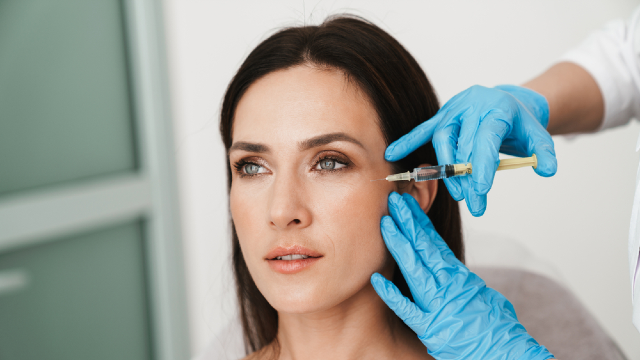
Rejuran Healer and Rejuran Eye: PDRN Skin Booster Guide for US Patients
Medically reviewed by Dr. Hyunju Kim, Medical Director, Mason Clinic
Rejuran is one of the most searched skin-booster names among US patients researching aesthetic care in Seoul, and it comes in more than one form. Rejuran Healer, sometimes referenced through the HB Plus formulation, is aimed at improving the overall skin environment, while Rejuran Eye is formulated for the delicate area around the eyes. Both belong to a family of treatments built around PDRN, a polynucleotide ingredient derived from salmon. This guide explains what these treatments are, how Mason Clinic in Seoul approaches them, and, most importantly for a US reader, a critical point about their regulatory status in the United States. This article is educational and is not a self-diagnosis tool; individual candidacy and treatment planning require an in-person consultation and ultrasound assessment at the clinic.
What Is Rejuran, and What Is PDRN?
Rejuran is a skin booster. Skin boosters are a category of treatments focused on improving skin quality, such as hydration, texture, tone, and the overall condition of the skin, rather than on adding sculpted volume to a specific feature. Rejuran's active basis is PDRN, short for polydeoxyribonucleotide, a polynucleotide ingredient that in Rejuran's case is derived from salmon. You may see it referred to in searches as a "salmon DNA skin injection" or a "polynucleotide skin treatment."
At Mason Clinic, Rejuran is described as an injectable skin booster that supports the regeneration of damaged skin cells and works toward hydration, elasticity, wrinkle improvement, and smoother skin texture. In other words, the emphasis is on improving the skin environment and supporting the skin's own condition over time, delivered as a treatment series rather than as a single dramatic intervention. Because the goal is skin quality rather than instant contour change, the clinic frames improvement as gradual, with multiple sessions potentially recommended for maintenance and results that vary from person to person.
Rejuran Is Not a Dermal Filler
This distinction is important enough to state on its own. Rejuran is not a hyaluronic acid dermal filler, and it should not be thought of as one. A dermal filler is placed to add volume and physically restore fullness to an area such as the cheeks, lips, or chin. Rejuran, by contrast, is a skin booster whose focus is the quality and condition of the skin itself, its barrier, hydration, texture, and tone, rather than sculpting a specific contour.
Confusing the two categories leads to the wrong expectations. If your goal is to add volume to a hollow or reshape a contour, that is a filler conversation. If your goal is to improve the skin environment and overall skin quality, that is where a PDRN skin booster like Rejuran is positioned. During a consultation, this distinction is one of the first things a clinician will clarify, because it determines whether a booster, a filler, or something else altogether fits your goals.
Critical for US Patients: Regulatory Status
This section is the single most important part of the article for readers in the United States, so read it carefully.
Injectable Rejuran, the PDRN or polynucleotide injectable described throughout this guide, is not approved by the US Food and Drug Administration. In 2022, the FDA issued a caution against injectable Rejuran pending clinical trials. That means the injectable form is not available or approved in the United States, and it is offered at Mason Clinic in Seoul under local Korean regulation rather than under US authorization.
There is a separate point that is easy to conflate, so it is worth being precise. Only topical cosmetic products containing c-PDRN are sold in the United States, and those are topical, no-injection cosmetic products. The topical cosmetic line is not the same thing as the injectable treatment discussed here, and the availability of a topical cosmetic product in the US should not be read as meaning the injectable is approved or available there. They are different products with different regulatory standing.
The practical implication is simple. If you are traveling to Seoul, injectable Rejuran is a treatment Mason Clinic offers there. If you are based in the United States and want to pursue this specific injectable at home, it is not an approved or available option, and you should speak with a US-licensed provider about alternatives that are authorized where you live. Understanding this before you plan travel is part of making an informed decision.
Rejuran Healer (HB Plus): What It Targets
Rejuran Healer, referenced by Mason Clinic through the HB Plus formulation, is presented as a skin booster that focuses on restoring the skin by improving a damaged skin environment, strengthening the skin barrier, providing deep hydration, and improving overall skin texture and tone. In the clinic's broader description of Rejuran, the treatment is said to support damaged skin-cell regeneration, hydration, elasticity, wrinkle improvement, and smoother texture.
Mason Clinic identifies people who tend to consider Rejuran Healer as those with a damaged skin condition, those seeking stronger skin-barrier function, deep hydration, and improved skin texture and tone, and those wanting better overall skin condition. The clinic also notes it is often chosen by patients whose skin has been weakened by frequent aesthetic procedures and who are looking to support recovery of skin quality. As always, these are general profiles, not a substitute for individual assessment.
Rejuran Eye: For the Delicate Under-Eye Area
Rejuran Eye, described by the clinic as an eye-area regeneration solution, is formulated for the thin, delicate skin around the eyes. Mason Clinic describes it as designed to improve fine lines and elasticity around the eyes while revitalizing thin under-eye skin.
The clinic identifies good candidates for Rejuran Eye as people concerned about dark circles, fine lines around the eyes, reduced under-eye elasticity, thin under-eye skin, or a tired-looking appearance around the eyes. Because the under-eye area is one of the most delicate regions of the face, it is treated as its own consideration rather than being lumped in with general facial skin, which is part of why a dedicated eye formulation exists. The same US regulatory status described above applies to the injectable eye treatment: it is offered in Seoul and is not FDA-approved or available in the United States.
Who Tends to Consider These Treatments?
Drawing the candidate profiles together, Mason Clinic describes suitable patients as those with loss of skin elasticity, dry or dehydrated skin, uneven skin texture, fine lines, early wrinkles, skin weakened by aesthetic procedures, and those with under-eye concerns such as fine lines, reduced elasticity, thin skin, or a tired-looking appearance. US patients often request these treatments to improve skin hydration, fine lines, and overall skin quality without surgery, and for their skin-supporting benefits, particularly in delicate areas such as under the eyes.
Importantly, Mason Clinic documents "who is not suitable" as needing clinic confirmation, meaning suitability is decided individually. No article can tell you whether Rejuran fits your skin; only a personal consultation and assessment can do that responsibly.
The Diagnostic-First Workflow at Mason Clinic
Mason Clinic's approach centers on diagnosis before treatment. For Rejuran, the process includes a doctor consultation, an ultrasound-based skin assessment that individually evaluates skin thickness, fat layer, and muscle layer, a review of your medical history, and personalized treatment planning. Consultation can be conducted directly by the clinic's Medical Director, Dr. Hyunju Kim, upon request.
The clinic emphasizes several safeguards that international patients often value. Injectable products are verified as genuine and are opened in front of the patient with photographic documentation of what is used. Care is delivered in private treatment rooms, with professional attention from cleansing through aftercare and no self-cleansing required. These measures are part of how the clinic frames its effort to reduce risk, alongside individualized, ultrasound-guided planning.
What a Rejuran Session Involves
Mason Clinic outlines the Rejuran process in clear steps: consultation, skin analysis, the Rejuran injection, post-treatment care, and a follow-up review. Before treatment, the ultrasound-based skin assessment and history review inform an individualized plan.
For comfort, Mason Clinic describes a pain-minimization program that may include advanced PRESS equipment, machine-assisted absorption of numbing cream, microneedles, pain-relief injections, and nerve anesthesia when appropriate. The clinic presents comfort as something it works to support through multiple methods rather than as a guaranteed pain-free experience, and the specific approach is tailored to the patient.
On dosing and scheduling, Rejuran treatments are offered as defined treatment units, and the clinic references distinct formulations including Rejuran Healer, Rejuran Eye, and Rejuran HB. How many sessions may be appropriate depends on your goals and skin, and the clinic notes that skin hydration and texture improve gradually and that multiple sessions may be recommended for maintenance. Follow-up care is guided according to your individual skin response and ongoing assessment, and a fixed number of visits is not specified. Pricing is outside the scope of this article; direct any cost questions to the clinic.
Realistic Results and Common Risks
Mason Clinic frames Rejuran results as gradual and natural rather than instant. The treatment is described as supporting skin regeneration, improving hydration balance, enhancing skin texture and elasticity, strengthening skin resilience, and, in the case of Rejuran Eye, improving under-eye skin quality and fine lines. The clinic emphasizes gradual, natural skin improvement over temporary changes, and it is explicit that results vary between individuals and that no outcome is guaranteed.
On risks, the clinic notes that temporary redness, swelling, bruising, or tenderness may occur, and that individual risks are discussed during consultation. These injection-site effects are common and generally temporary, but any injectable treatment carries risks that should be weighed on an individual basis. The reliable way to understand the specific risks that apply to you is a personalized consultation, where your history and skin can be reviewed before anything is recommended.
How Rejuran Compares to Other Skin Boosters
Rejuran is one of several skin-quality options at Mason Clinic, and it is helpful to see it in context rather than in isolation. The clinic lists related and alternative treatments including Rejuran Eye, Elravie Re2O, SkinVive, Juvelook Skin Booster, Aqua Glow Booster, and Exosome Therapy. Each has its own emphasis, and the clinic's model is to select and, where appropriate, combine treatments based on ultrasound findings and individual goals rather than defaulting to a single product for everyone.
For a patient comparing options, the useful mental model is to focus on your primary concern. Rejuran's identity as a PDRN-based skin booster is oriented toward the skin environment, barrier, hydration, texture, and tone. Other boosters and regenerative treatments emphasize different mechanisms or goals. Because these categories overlap, the ultrasound-guided consultation is where a realistic choice, sequence, or combination is decided. Arriving with your concerns and goals, rather than a fixed product in mind, tends to lead to a more appropriate plan.
Bottom Line
Rejuran Healer and Rejuran Eye are PDRN-based skin boosters, built on a salmon-derived polynucleotide ingredient, offered at Mason Clinic in Seoul to support skin quality, the skin environment, barrier, hydration, texture, and tone, with Rejuran Eye formulated for the delicate under-eye area. They are skin boosters, not hyaluronic acid fillers, and their focus is skin quality rather than sculpted volume. The essential point for US readers is regulatory: injectable Rejuran is not FDA-approved, the FDA issued a caution against it in 2022 pending clinical trials, and only topical c-PDRN cosmetic products, not the injectable, are sold in the United States. If you are traveling to Seoul, an ultrasound-guided consultation at Mason Clinic, available directly with the Medical Director on request, is the appropriate way to learn whether Rejuran suits your skin. If you are seeking care at home, consult a US-licensed provider about authorized options. Results vary, common effects include temporary redness, swelling, bruising, or tenderness, and no outcome is guaranteed.
Frequently Asked Questions
**What is Rejuran made of?**Rejuran is based on PDRN, a polynucleotide ingredient derived from salmon. It is a skin booster, delivered as an injectable at Mason Clinic in Seoul, aimed at improving the skin environment, hydration, elasticity, wrinkles, and texture rather than adding sculpted volume.
**Is injectable Rejuran FDA-approved in the United States?**No. Injectable Rejuran is not FDA-approved. The FDA issued a caution against injectable Rejuran in 2022 pending clinical trials, and the injectable is not available or approved in the US. Only topical c-PDRN cosmetic products, which are not injected, are sold in the United States, and those are a separate product from the injectable.
**Is Rejuran a dermal filler?**No. Rejuran is a skin booster focused on skin quality, the skin barrier, hydration, texture, and tone, not a hyaluronic acid filler used to add volume. If your goal is volume or contour, that is a different treatment conversation.
**What is the difference between Rejuran Healer and Rejuran Eye?**Rejuran Healer, referenced through the HB Plus formulation, targets the overall skin environment, barrier strength, deep hydration, and texture and tone. Rejuran Eye is formulated for the thin, delicate under-eye area to address fine lines, elasticity, and thin under-eye skin.
**What side effects should I expect?**Mason Clinic notes that temporary redness, swelling, bruising, or tenderness at the injection site may occur, and that individual risks are discussed during consultation. As with any injectable, risks should be weighed individually with a clinician.
**How many sessions will I need, and when will I see results?**The clinic describes improvements in hydration and texture as gradual, and notes that multiple sessions may be recommended for maintenance. There is no fixed number of visits; follow-up is guided by your individual skin response. Results vary and are not guaranteed.
Disclaimer
This article is for general educational purposes only and is not a self-diagnosis tool. It does not constitute medical advice, and reading it does not establish a doctor-patient relationship. Individual candidacy, treatment planning, and any discussion of risks require an in-person consultation and ultrasound assessment at Mason Clinic. Results vary from person to person, and no specific outcome is guaranteed. Regulatory status differs by country: injectable Rejuran is not FDA-approved and is offered in Seoul under local regulation, not in the United States. For questions about pricing, suitability, or care, please contact the clinic directly.
Clinical Safety Notice & Personalized Consultation
All treatments across Mason Clinic's specialized clinical centers are planned after a 1:1 consultation with our attending physicians. Individual outcomes vary depending on skin anatomy and condition. Possible post-procedure effects include temporary redness, swelling, bruising, tenderness, or infection.
Request a 1:1 ConsultationClinical Safety Notice & Personalized Consultation
All treatments across Mason Clinic's specialized clinical centers are planned after a 1:1 consultation with our attending physicians. Individual outcomes vary depending on skin anatomy and condition. Possible post-procedure effects include temporary redness, swelling, bruising, tenderness, or infection.
Request a 1:1 Consultation