1:1 Consultation
Menopause and Skin Elasticity: Regenerative Options for Women Over 50
How menopause affects collagen and skin elasticity after 50, plus a clear look at regenerative and energy-based options and their US regulatory status.
Mason Clinic · Medical Editorial & Clinical Insight
1:1 Consultation →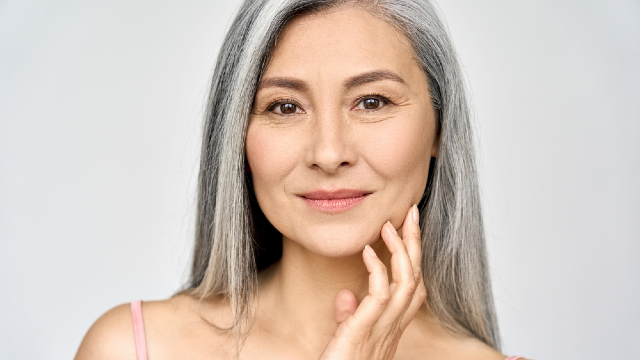
Menopause and Skin Elasticity: Regenerative Options for Women Over 50
Medically reviewed by Dr. Hyunju Kim, Medical Director, Mason Clinic
Many women notice that their skin changes noticeably around menopause. Skin that once bounced back can start to feel looser, thinner, and drier, and the changes often seem to arrive faster than expected. If you are over 50 and wondering what is happening to your skin, and what can realistically be done about it, this guide is for you. It explains the biology behind menopausal skin change, the difference between decisions that belong with your own physician and cosmetic options a dermatology clinic can discuss, and how the treatments offered at Mason Clinic in Seoul are classified from a US regulatory standpoint.
This article is educational. It is not a self-diagnosis tool, and it is not a substitute for an in-person evaluation. Every person's skin, health history, and goals are different, so the only way to know what may suit you is a personalized consultation with a qualified physician.
Why Menopause Changes Your Skin
The skin is an organ that responds to hormones, and the hormonal shift of menopause has a direct effect on how skin looks and feels. As estrogen levels decline, several structural changes tend to occur together, which is why skin over 50 can seem to age on more than one front at once.
Collagen decline. Collagen is the protein scaffold that gives skin its structure and thickness. Estrogen supports collagen production, so as levels fall, the rate of collagen loss can accelerate in the years surrounding menopause. Thinner, less densely supported skin is more prone to fine lines, creasing, and a general loss of firmness.
Reduced elasticity. Elastin fibers allow skin to stretch and recoil. When the supporting matrix weakens, skin recovers more slowly after being stretched, which is experienced as sagging or a loss of the "snap" that younger skin has along the jawline, cheeks, and neck.
Dryness and a weaker barrier. Menopausal skin often produces less oil and holds less water. The result can be persistent dryness, a rough or dull surface, and a skin barrier that feels more reactive or fragile than before. Dryness also makes fine lines look more pronounced.
Changes in facial contour. Loss of firmness in the deeper supportive layers, combined with natural changes in fat distribution and bone over time, can soften the contours of the face and contribute to the appearance of laxity around the lower face and neck.
These changes are a normal part of the aging process, and they vary widely from person to person. Genetics, sun exposure over a lifetime, smoking, sleep, and overall health all influence how quickly and how visibly menopausal skin changes appear.
Hormone and Menopause Decisions Belong With Your Own Physician
Because menopause is driven by hormones, it is natural to wonder whether hormone therapy or other medical management could help the skin. This is an important point to be clear about: decisions about menopause management, including any form of hormone therapy, belong with your own physician or gynecologist. These are individualized medical decisions that depend on your complete health history, personal and family risk factors, and your own priorities, and they require the kind of ongoing care that a treating physician provides.
Mason Clinic is a non-surgical dermatology and aesthetics clinic, and this article does not offer hormone advice, recommend for or against hormone therapy, or suggest that any cosmetic treatment substitutes for medical menopause care. If menopausal symptoms are affecting your quality of life, the right first conversation is with the physician who manages your general and reproductive health. Skin-focused options, discussed below, address the appearance and quality of the skin and are a separate matter from menopause management itself.
Understanding the US Regulatory Picture Before You Compare Options
One of the most useful things to understand before comparing treatments in Seoul is that regulatory status differs by country. A treatment that is widely available and legally offered in South Korea has not necessarily been reviewed or authorized by the US Food and Drug Administration (FDA). Korean approval (MFDS) and US authorization are separate systems. Knowing which category a treatment falls into helps you ask better questions and set realistic expectations.
Broadly, the options discussed for mature, menopausal skin fall into two groups: energy-based and filler options, several of which have specific US FDA authorizations, and regenerative injectable options, which do not. The sections below keep these distinctions explicit.
Regenerative Options at Mason Clinic — and Their US Status
"Regenerative" is a popular term in aesthetics, used for treatments that aim to support the skin's own repair processes. Mason Clinic offers several treatments in this category. It is important to state plainly that these regenerative options are not approved by the US FDA for aesthetic use. The FDA has issued a consumer alert about regenerative medicine products, including stem cells and exosomes, cautioning the public that many such products marketed for a range of uses are not FDA-approved and that their safety and effectiveness have not been established for those uses.
M Cell Skin (stem cell-based). Mason Clinic describes M Cell Skin as a regenerative skin treatment that uses the patient's own stem cells and growth factors to support skin repair and renewal. The described process involves blood collection, cell separation and concentration, and delivery to the skin. From a US standpoint, the FDA has not approved stem-cell therapies for cosmetic or aesthetic use; the only FDA-approved stem-cell-based products are certain umbilical-cord-blood products used to treat blood-related disorders, not skin rejuvenation.
Exosome Therapy and ASCE+. Mason Clinic offers exosome-based treatments, described as providing regenerative and anti-inflammatory support to renew the skin from within. Here the regulatory position is unambiguous: no exosome product is FDA-approved for any use in the United States. The FDA has issued a public safety notification about exosome products and has warned about unapproved products in this category. A product being listed with the FDA is not the same as being approved.
Rejuran and skin boosters. Mason Clinic offers skin boosters such as Rejuran (described as supporting the skin barrier, hydration, and overall skin texture, with an eye-area version for fine lines and under-eye skin) and Skin Vive (described as a hydrating booster that supports radiance, texture, and elasticity). These injectable skin boosters are not FDA-approved. As a naming note for US readers, "Skin Vive" should not be confused with "SkinVive by Juvederm," which is a separately, FDA-approved product; they are not the same thing.
None of this means these treatments are unavailable or that women do not choose them in Seoul. It means that if you are coming from the US, you should understand that you would be receiving treatments that your home regulator has not authorized for these uses, that the described benefits are the clinic's positioning rather than FDA-established outcomes, and that results vary from person to person. These are exactly the kinds of points to raise directly with the clinic and to weigh with your own physician.
Energy-Based and Filler Options — With FDA Precision
Alongside regenerative injectables, mature skin concerns are often addressed with energy-based devices that aim to stimulate the skin's own collagen, and with dermal fillers. Several of these have specific US FDA authorizations, and it is worth being precise about them.
Ultherapy Prime (FDA-cleared). Ultherapy and Ultherapy PRIME are FDA-cleared devices that use focused ultrasound energy. Mason Clinic describes Ultherapy Prime as a non-surgical ultrasound-based lifting treatment that targets deeper structural tissue, including the SMAS layer, to support lifting, tightening, and gradual collagen regeneration. Cleared indications for this device technology include lifting the brow, lifting lax tissue under the chin and on the neck, and improving lines on the décolleté. For women focused on SMAS lifting for mature skin, this is a commonly discussed option.
Thermage FLX (FDA-cleared). Thermage FLX is an FDA-cleared radiofrequency device. Mason Clinic describes it as delivering controlled radiofrequency energy into deeper skin layers, with a cooling system to protect the surface, to support firmness and reduce the appearance of wrinkles as collagen regeneration occurs gradually. It is cleared in the US in the context of facial and periorbital (around-the-eye) wrinkles.
Sofwave (FDA-cleared). Sofwave is an FDA-cleared device that uses ultrasound energy to improve the appearance of facial lines and wrinkles, and to lift the eyebrow and lax tissue under the chin and on the neck, for adults aged 22 and older. It targets the mid-dermis. It has also been cleared for short-term improvement in the appearance of cellulite.
Dermal fillers (FDA-approved). For volume loss and contour, several dermal fillers and collagen stimulators are FDA-approved in the US, including Juvederm, Radiesse, and Sculptra (a poly-L-lactic acid collagen stimulator). These are a separate category from the unapproved skin boosters above, and the two should not be equated. Whether a filler is appropriate for you is a clinical decision made in consultation.
The key contrast is this: the energy devices above are FDA-cleared, certain fillers are FDA-approved, while the regenerative injectables and skin boosters described earlier are not FDA-authorized. All of them still require an individualized assessment, and none of them guarantees a specific result.
How Mason Clinic Approaches Mature Skin
Mason Clinic's stated approach centers on a diagnostic-first consultation. Rather than applying a generic protocol, the clinic describes evaluating each patient's skin condition and elasticity and using precision ultrasound assessment to examine skin thickness, the fat layer, and the muscle layer before planning treatment. A director-led 1:1 consultation is available on request. The clinic also describes using genuine products opened in front of the patient with photo documentation, private treatment rooms, professional cleansing and aftercare, and multiple pain-minimization methods.
For Mason Clinic mature skin consultations, this assessment-driven model matters because menopausal skin change is rarely just one problem. Loss of firmness, thinning, and dryness often coexist, which is why a single treatment is seldom the whole answer, and why a careful evaluation is used to decide what, if anything, is appropriate for an individual. Importantly, this planning process does not change the regulatory status of any individual treatment; it simply personalizes what is discussed.
Setting Realistic Expectations and Understanding Risks
Realistic expectations are essential for mature skin. Non-surgical treatments work with the skin's biology and tend to produce gradual, natural-looking change rather than the results of surgery. Collagen-stimulating treatments in particular develop over weeks to months. Outcomes vary from person to person depending on skin condition, health, and how each individual responds, and no ethical clinic can guarantee a specific result or promise to reverse the effects of aging.
Every procedure carries potential risks and side effects, which differ by treatment and by individual. Energy-based and injectable procedures can involve temporary effects such as redness, swelling, or tenderness, and rarer effects vary by modality. Because regenerative products in particular are not FDA-authorized, the FDA has specifically cautioned consumers about safety concerns tied to unapproved products in this category. A thorough consultation should include a candid discussion of the specific risks, aftercare, and what a treatment can and cannot do for you.
If you are considering traveling to Seoul, remember that logistics such as booking, payment, travel timing, interpretation, and aftercare once you return home should be confirmed directly with the clinic, and that continuity of care with your physician at home is part of responsible planning.
Bottom Line
Menopause meaningfully affects the skin, driving collagen loss, reduced elasticity, dryness, and softening contours in the years around and after 50. Understanding this biology helps you approach treatment thoughtfully rather than chasing quick fixes. Two things deserve to stay separate in your mind: menopause management, including any hormone therapy, is a medical decision for your own physician or gynecologist, while cosmetic options address the appearance and quality of the skin. Among the options, energy-based devices such as Ultherapy Prime, Thermage FLX, and Sofwave are FDA-cleared, and several dermal fillers are FDA-approved, whereas the regenerative injectables offered in Seoul, including M Cell stem-cell-based treatment, exosome therapy, and skin boosters such as Rejuran and Skin Vive, are not FDA-approved. Results vary, risks exist, and the right path can only be identified through an individualized, in-person assessment. Use this guide to ask sharper questions, and let a qualified physician help you decide.
Frequently Asked Questions
**Does menopause really cause faster skin aging?**The hormonal changes of menopause, particularly declining estrogen, are associated with a faster rate of collagen loss and reduced elasticity in the years surrounding it, along with increased dryness. How much this affects any individual varies widely based on genetics, sun exposure, and overall health. A physician can help you understand your own skin.
**Can a skin treatment replace hormone therapy or menopause care?**No. Cosmetic skin treatments address the appearance and quality of the skin, not the underlying hormonal changes of menopause. Decisions about menopause management and any hormone therapy belong with your own physician or gynecologist, who knows your full health history.
**Are the regenerative treatments at Mason Clinic FDA-approved?**No. M Cell (stem cell-based), exosome therapy including ASCE+, and skin boosters such as Rejuran and Skin Vive are not approved by the US FDA. The FDA has not approved stem-cell therapies for aesthetic use and no exosome product is FDA-approved. They are offered in Seoul, where regulatory systems differ from the US.
**Which options for mature skin do have US FDA authorization?**Among energy-based devices, Ultherapy Prime, Thermage FLX, and Sofwave are FDA-cleared. Among injectables for volume, fillers such as Juvederm, Radiesse, and Sculptra are FDA-approved. These are distinct from the unapproved regenerative injectables and skin boosters.
**Will these treatments guarantee firmer skin?**No treatment can guarantee a specific outcome or reverse aging. Non-surgical, collagen-stimulating options tend to produce gradual, natural-looking change that develops over weeks to months, and results vary from person to person. Every procedure also carries potential risks that should be discussed in a consultation.
**How do I decide what is right for me?**Start with a personalized consultation. Mason Clinic uses a diagnostic-first approach with precision ultrasound assessment of the skin, fat, and muscle layers to plan individually. For menopause management itself, and to review your overall health before any procedure, consult your own physician.
Disclaimer
This article is for general educational purposes only and is not a self-diagnosis tool or a substitute for professional medical advice. It does not establish a physician-patient relationship. Candidacy for any treatment requires an in-person consultation, and for skin and lifting concerns, an ultrasound-based assessment. Regulatory status, safety information, and availability of treatments differ by country; treatments described as offered in Seoul may not be authorized by the US FDA. Individual results vary, and all procedures carry potential risks and side effects. Decisions about menopause and hormone therapy should be made with your own physician or gynecologist. Please consult a qualified physician or dermatologist, and contact Mason Clinic directly to confirm details, logistics, and suitability.
Clinical Safety Notice & Personalized Consultation
All treatments across Mason Clinic's specialized clinical centers are planned after a 1:1 consultation with our attending physicians. Individual outcomes vary depending on skin anatomy and condition. Possible post-procedure effects include temporary redness, swelling, bruising, tenderness, or infection.
Request a 1:1 ConsultationClinical Safety Notice & Personalized Consultation
All treatments across Mason Clinic's specialized clinical centers are planned after a 1:1 consultation with our attending physicians. Individual outcomes vary depending on skin anatomy and condition. Possible post-procedure effects include temporary redness, swelling, bruising, tenderness, or infection.
Request a 1:1 Consultation