1:1 Consultation
M Cell Hair Conditioning: Scalp Regeneration Explained
M Cell Hair Conditioning explained for US patients: how autologous scalp regeneration works, its US regulatory status, and Mason Clinic's Seoul approach.
Mason Clinic · Medical Editorial & Clinical Insight
1:1 Consultation →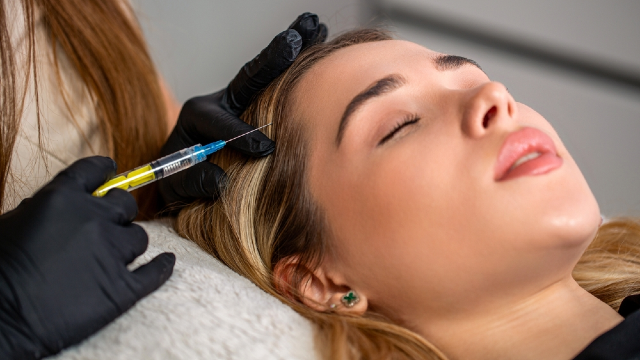
M Cell Hair Conditioning: Scalp Regeneration Explained
Medically reviewed by Dr. Hyunju Kim, Medical Director, Mason Clinic
M Cell Hair Conditioning is a scalp-based regenerative hair treatment that uses the patient's own tissue-derived material, delivered through micro-injections, as part of Mason Clinic's Hair and Scalp Therapy program in Seoul. Because it is a regenerative treatment that relies on autologous material, it sits in a very specific regulatory category that US readers should understand before considering travel. This guide explains what the treatment is, what "autologous" means, how it fits among the clinic's other scalp options, and, most importantly for anyone based in the United States, a critical point about its regulatory status. This article is educational and is not a self-diagnosis tool; individual candidacy and treatment planning require an in-person consultation and ultrasound assessment at the clinic.
What Is M Cell Hair Conditioning?
Mason Clinic describes M Cell Hair Conditioning as a scalp-based regenerative hair treatment designed to address hair loss by supporting the restoration of damaged scalp and hair follicle cells. It uses an autologous tissue-based M CELL solution, delivered through micro-injections, with the stated aim of activating regenerative signals and supporting the natural hair growth cycle.
The word "regenerative" here refers to the general goal of supporting the scalp's own recovery processes rather than, for example, relaxing scalp muscle tension or altering sebum activity, which are the aims of other, different scalp treatments. The distinguishing feature of M Cell Hair Conditioning is that the material used is autologous and tissue-based, meaning it is derived from the patient's own body, and it is placed directly into affected scalp areas through precise micro-injections.
As with the clinic's other regenerative offerings, several specifics, such as detailed risk statements, precise recovery timelines, and results longevity, are documented as items that need clinic confirmation. Where the clinic has not published a specific claim, this guide does not fill the gap with invented detail. The reliable way to understand how the treatment might apply to you is a personal consultation, not an article.
What "Autologous" Means
"Autologous" describes biological material that comes from the patient's own body rather than from a donor, an animal source, or a manufactured product. In an autologous treatment, material is collected from you, prepared, and then returned to you, so the active component originates with the patient rather than with an outside source.
For M Cell Hair Conditioning, the clinic describes an autologous tissue-based M CELL solution that is delivered into the scalp through micro-injections. In its own comparison language, the clinic contrasts this with treatments that primarily address surface symptoms, framing M Cell Hair Conditioning instead as focused on regenerative support delivered into the scalp to encourage follicle recovery and the natural hair growth cycle.
Understanding "autologous" also helps set realistic expectations. The term describes where the material comes from and the general approach, it does not by itself promise hair regrowth, a specific increase in density, or any guaranteed outcome. It is a description of method, not a measure of effectiveness, and this guide keeps those two ideas separate on purpose.
Critical for US Patients: Regulatory Status
This section is the single most important part of the article for readers in the United States, so read it carefully.
M Cell Hair Conditioning is not approved by the US Food and Drug Administration. The FDA has not approved stem-cell or regenerative therapies for aesthetic or hair use. Regenerative products marketed for cosmetic or hair applications generally fall outside the narrow set of exceptions in US regulation, which is why they are treated as unapproved drugs or biological products. The FDA has also issued a consumer alert about unapproved regenerative-medicine products, including stem cells and exosomes, cautioning the public that many such products have not been proven safe or effective and are not FDA-approved. That consumer alert applies to the general category this treatment belongs to.
The practical implications for a US reader are straightforward. M Cell Hair Conditioning is offered at Mason Clinic in Seoul under local Korean regulation, not under US authorization. Its benefit for hair loss should be regarded as unproven from a US regulatory standpoint, results vary from person to person, and no outcome is guaranteed. As with any procedure that involves injections and the handling of biological material, there are risks to discuss directly with the treating physician, including the possibility of infection, injection-site reactions such as redness, swelling, or tenderness, and the fact that the treatment's benefit is not established. This guide does not promise hair regrowth, and neither should any responsible description of the treatment. If you are based in the United States, understanding this regulatory status before you plan travel is part of making an informed decision.
Context: FDA-Approved Hair-Loss Options in the US
For general context, and without suggesting any equivalence, it is worth noting that some hair-loss treatments are FDA-approved in the United States. According to general medical information on hair loss, medications such as minoxidil and finasteride are approved options that a US-licensed provider may discuss for certain types of hair loss. These are established, authorized products with their own indications, benefits, and risks.
The reason to mention this is simply to give a US reader a point of reference. M Cell Hair Conditioning is a different kind of treatment, offered under a different regulatory system, and it is not being presented here as equivalent to, better than, or a substitute for any FDA-approved option. If your primary interest is a treatment authorized where you live, that is a conversation for a US-licensed provider, who can review whether an approved option fits your situation. The comparison is contextual, not a claim of interchangeability.
Who Tends to Consider M Cell Hair Conditioning?
Mason Clinic describes candidates for M Cell Hair Conditioning as people experiencing hair loss related to weakened follicles, those with dormant or resting hair follicles, those with reduced hair thickness and density, and those with scalp imbalance associated with inflammation or reduced circulation. These are broad profiles that describe the concerns the treatment is oriented toward, not a checklist that qualifies anyone in advance.
On who should avoid or postpone treatment, the clinic documents this as an item that needs clinic confirmation, which means suitability is decided individually rather than through self-assessment. No article can tell you whether M Cell Hair Conditioning is appropriate for you; that determination is made in person, after a clinician has evaluated your scalp and reviewed your history.
The Diagnostic-First Workflow at Mason Clinic
Mason Clinic's model centers on diagnosis before treatment. For M Cell Hair Conditioning, the documented process begins with a consultation with Dr. Hyunju Kim, the clinic's Medical Director, followed by an ultrasound-based scalp evaluation and individual treatment planning. The ultrasound step is used to assess the scalp and tissues so that planning is based on your anatomy rather than on a generic template.
The clinic emphasizes several safeguards that international patients often value. It describes ultrasound-based diagnosis, physician-led consultation, controlled injection techniques, authenticated treatment materials, photographic documentation of injectable materials and dosages, private treatment rooms, and professional aftercare as part of how it approaches care. These are process safeguards framed around risk reduction and transparency; they should not be read as a promise of a particular outcome.
What a Session Involves
Mason Clinic outlines the M Cell Hair Conditioning procedure in clear steps. The sequence is: a consultation with the Medical Director, an ultrasound scalp evaluation, individual treatment planning, application of anesthetic and comfort measures if required, micro-injection of the M CELL solution into affected scalp areas, professional post-treatment care, and follow-up monitoring.
In plain terms, the treatment starts with diagnosis and planning, then delivers the autologous tissue-based solution into targeted areas of the scalp through micro-injections, and concludes with professional aftercare and ongoing monitoring. The clinic notes that details such as session length, how many days to stay in Korea, and when to fly home are items that need clinic confirmation, which is another reason planning is handled individually rather than through general rules. Pricing is outside the scope of this article; direct any cost questions to the clinic.
Comfort and Pain Management
Because the treatment involves scalp injections, comfort is a reasonable concern. Mason Clinic describes multiple comfort measures that may be used during treatment, including advanced PRESS devices, anesthetic cream absorption systems, microneedle techniques, pain-relief injections, and nerve block anesthesia, applied when clinically appropriate and according to the treatment plan.
The clinic frames comfort as something supported through several methods and tailored to the individual, rather than as a guaranteed pain-free experience. Which measures are used for any given patient depends on the plan and the clinician's judgment, decided during the consultation rather than promised in advance.
Realistic Results and Common Risks
Mason Clinic frames M Cell Hair Conditioning results as gradual rather than instant. The clinic states that the treatment aims to support follicle regeneration, reactivate dormant follicles, improve scalp health, and encourage a gradual restoration of the natural hair growth cycle, and that hair thickness and density may improve progressively over time. Crucially, the clinic is explicit that individual results vary. This guide does not add efficacy claims beyond what the clinic states, and, given the US regulatory status described above, the treatment's benefit should be understood as unproven from a US standpoint. It does not promise hair regrowth.
On risks, any procedure that involves injections and the handling of biological material carries risks, including infection and injection-site reactions such as redness, swelling, or tenderness. Beyond those, the benefit of regenerative hair treatments like this one is not established, which is itself a consideration when weighing whether to proceed. Mason Clinic documents a detailed, treatment-specific risk statement as an item that needs clinic confirmation, which is exactly why the specific risks that apply to you should be discussed directly with the treating physician during consultation, where your scalp condition and history can be reviewed.
Aftercare and Follow-Up
Mason Clinic describes professional aftercare delivered immediately following treatment as part of the workflow. Its documented aftercare approach includes professional post-treatment care by clinic staff, no self-cleansing required during clinic care, ongoing scalp monitoring, a long-term maintenance program, and follow-up assessments. The clinic notes that hair regeneration occurs gradually and that follow-up evaluations help monitor scalp condition and hair density over time.
As with the rest of the treatment, aftercare specifics are individualized. The guidance above reflects the clinic's general approach and should be confirmed and tailored during your own consultation rather than treated as a universal protocol.
How It Fits Among Mason Clinic's Hair and Scalp Options
M Cell Hair Conditioning is one of several treatments within Mason Clinic's Hair and Scalp Therapy program. The clinic lists other options in this category, including Hair Follicle Botox Injection, Alopecia Areata Injection, and ASCE+ HRLV. What sets M Cell Hair Conditioning apart, in the clinic's framing, is its focus on regenerative follicle recovery using autologous M CELL material, as distinct from options that address the scalp differently, such as those focused on the scalp muscle layer.
The clinic also notes that M Cell Hair Conditioning may be combined with other treatments depending on your scalp condition and goals, decided after assessment. As always, which option or combination fits, if any, is determined individually through the diagnostic-first process rather than assumed in advance. It is worth repeating that none of these regenerative options is FDA-approved for hair use, and the appropriate choice is a conversation for a clinician who can review your specific situation.
Bottom Line
M Cell Hair Conditioning is an autologous, scalp-based regenerative hair treatment offered at Mason Clinic in Seoul, using a tissue-based M CELL solution delivered into the scalp through micro-injections as part of a diagnostic-first workflow. Its defining feature is that the material is autologous, meaning it comes from the patient's own body, and its stated aim is to support follicle recovery and the natural hair growth cycle. The essential point for US readers is regulatory: M Cell Hair Conditioning is not FDA-approved, the FDA has not approved stem-cell or regenerative therapies for aesthetic or hair use, and the FDA has issued a consumer alert about unapproved regenerative-medicine products that applies to this category. Its benefit is unproven from a US standpoint, results vary, and no outcome is guaranteed. For general context, some hair-loss treatments such as minoxidil and finasteride are FDA-approved in the US, but M Cell Hair Conditioning is not equivalent to those authorized options. Risks, including infection, injection-site reactions, and unproven benefit, should be discussed directly with the physician. If you are traveling to Seoul, an ultrasound-guided consultation at Mason Clinic, available with the Medical Director, is the appropriate way to learn whether the treatment suits you. If you are seeking care at home, consult a US-licensed provider about authorized options.
Frequently Asked Questions
**What does "autologous" mean in M Cell Hair Conditioning?**Autologous means the material used comes from your own body rather than from a donor, an animal source, or a manufactured product. Mason Clinic describes an autologous tissue-based M CELL solution that is delivered into the scalp through micro-injections.
**Is M Cell Hair Conditioning FDA-approved in the United States?**No. M Cell Hair Conditioning is not FDA-approved. The FDA has not approved stem-cell or regenerative therapies for aesthetic or hair use, and it has issued a consumer alert about unapproved regenerative-medicine products. The treatment is offered in Seoul under local regulation.
**Will this treatment regrow my hair?**No treatment described here promises hair regrowth. Mason Clinic frames results as gradual and states that individual results vary, and from a US regulatory standpoint the treatment's benefit is unproven. Any expectations should be discussed individually with the physician.
**How does it compare to FDA-approved hair-loss treatments like minoxidil or finasteride?**Those are FDA-approved medications in the US with their own indications and risks. M Cell Hair Conditioning is a different, regenerative treatment offered under a different regulatory system and is not equivalent to or a substitute for those approved options. A US-licensed provider can discuss authorized treatments where you live.
**What risks should I know about?**As with any procedure involving injections and biological material, risks include infection and injection-site reactions such as redness, swelling, or tenderness, and the benefit of regenerative hair treatments is not established. Mason Clinic lists a detailed risk statement as needing clinic confirmation, so the specific risks that apply to you should be discussed directly with the treating physician.
**Who decides whether I am a suitable candidate?**Suitability is decided in person, after a consultation with the Medical Director, an ultrasound scalp evaluation, and individualized planning. There is no way to self-qualify, and an article cannot determine whether the treatment is appropriate for you.
Disclaimer
This article is for general educational purposes only and is not a self-diagnosis tool. It does not constitute medical advice, and reading it does not establish a doctor-patient relationship. Individual candidacy, treatment planning, and any discussion of risks require an in-person consultation and ultrasound assessment at Mason Clinic. Results vary from person to person, and no specific outcome is guaranteed. Regulatory status differs by country: M Cell Hair Conditioning is not FDA-approved, the FDA has not approved stem-cell or regenerative therapies for aesthetic or hair use, and the treatment is offered in Seoul under local regulation rather than in the United States. For questions about pricing, suitability, or care, please contact the clinic directly.
Clinical Safety Notice & Personalized Consultation
All treatments across Mason Clinic's specialized clinical centers are planned after a 1:1 consultation with our attending physicians. Individual outcomes vary depending on skin anatomy and condition. Possible post-procedure effects include temporary redness, swelling, bruising, tenderness, or infection.
Request a 1:1 ConsultationClinical Safety Notice & Personalized Consultation
All treatments across Mason Clinic's specialized clinical centers are planned after a 1:1 consultation with our attending physicians. Individual outcomes vary depending on skin anatomy and condition. Possible post-procedure effects include temporary redness, swelling, bruising, tenderness, or infection.
Request a 1:1 Consultation