1:1 Consultation
LDM SMART TRI Ultrasound Therapy: Multi-Frequency Skin Remodeling Explained
LDM SMART TRI at Mason Clinic, Seoul: how multi-frequency ultrasound supports skin hydration, elasticity and texture. Candidacy, effects and care.
Mason Clinic · Medical Editorial & Clinical Insight
1:1 Consultation →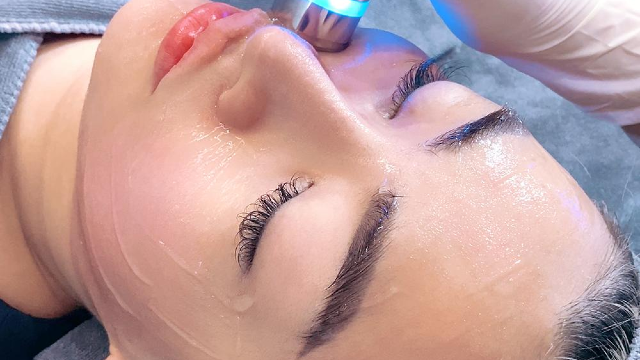
LDM SMART TRI Ultrasound Therapy: Multi-Frequency Skin Remodeling Explained
Medically reviewed by Dr. Hyunju Kim, Medical Director, Mason Clinic
If you have started researching non-surgical skin treatments, you have probably noticed how many of them rely on energy of some kind — light, radiofrequency, and increasingly, ultrasound. Ultrasound in particular has become a familiar name in skin care, and one of the treatments patients ask about at Mason Clinic in Seoul is LDM SMART TRI, a multi-frequency ultrasound therapy. The name can sound intimidatingly technical, which is exactly why it is worth slowing down and explaining what it actually is, what it sets out to do, and what a reasonable set of expectations looks like.
This article is a technology-education piece. Rather than pushing a particular package or promising a specific transformation, it walks through the ideas behind multi-frequency ultrasound skin treatment, how Mason Clinic frames LDM SMART TRI, who it is aimed at, and what the treatment day and aftercare involve. It is written for the patient who wants to understand the science before choosing anything. It is educational only, and it is not a self-diagnosis tool — deciding whether any treatment suits your skin is a job for a proper clinical assessment, not an article.
What LDM SMART TRI is
LDM SMART TRI is a multi-frequency ultrasound treatment used at Mason Clinic to support skin condition, texture, and tone. LDM stands for Local Dynamic Micro-massage, a name that captures the underlying idea: fine, rapid micro-vibrations delivered into the skin. Mason Clinic describes the equipment in terms of micro-vibration technology and high-density ultrasound, delivered within a professional treatment system that includes ultrasound diagnosis.
In practical terms, it is a non-invasive, non-surgical skin-remodeling treatment. It does not cut, and it is not a filler or an injection. Instead, it uses ultrasound energy and micro-vibration with the goal of supporting the quality of the skin — its hydration, its elasticity, and its overall condition — rather than adding volume from outside. The clinic positions it for gentle skin rejuvenation and hydration, and describes the benefits it aims to support as improved hydration, elasticity, skin comfort, the appearance of fine lines, and overall skin quality, while stating clearly that results vary by patient.
An important point of context for readers outside Korea: the specific LDM SMART TRI device is not documented as cleared by the United States Food and Drug Administration. It is offered at Mason Clinic in Seoul under local regulation. This article therefore describes the ultrasound and skin-remodeling category in neutral terms and does not imply any United States clearance of this particular device. Regulatory status and product availability differ from country to country, so if that matters for your decision, it is something to confirm directly with the clinic.
How ultrasound is used in skin treatments
To understand what a treatment like this is trying to do, it helps to step back and look at ultrasound as a category. Ultrasound is sound energy at frequencies above what we can hear. In medicine it is best known for imaging — the same principle behind a diagnostic scan — but ultrasound energy can also be delivered into tissue to produce mechanical and thermal effects. In aesthetic skin care, that energy is used in a controlled way with the aim of prompting the skin to respond and, over time, to refine its condition.
Different ultrasound treatments use different approaches, which is why they are not interchangeable. Some focus energy deep beneath the surface to encourage tightening and lifting. Others, like the micro-massage concept behind LDM, work with rapid, gentle micro-vibration aimed more at skin quality — hydration, comfort, and texture — than at deep structural lifting. The idea of a multi-frequency device is that using more than one frequency allows the treatment to work in more than one way and to be tailored, rather than relying on a single fixed setting. This category-level explanation is offered as general background on how ultrasound is discussed in skin care; it is not a specific performance claim about the LDM SMART TRI device, whose realistic outcomes for you are best discussed with the clinic.
You will sometimes see related terms in this field, such as sonophoresis — a general concept describing the use of ultrasound to help the skin take up topical substances. Terms like these are part of the broader vocabulary of ultrasound in skincare and appear frequently in patient research. They are worth being aware of so you can ask informed questions, but the most reliable information about what LDM SMART TRI specifically does for your skin will come from the clinic's assessment rather than from generic descriptions of the category.
What "skin remodeling" really means
"Remodeling" is a word that gets used loosely in aesthetics, so it is worth grounding. In skin care, remodeling generally refers to gradual, progressive change in the quality and condition of the skin, as opposed to an instant, dramatic before-and-after. It is a slow-and-steady concept: supporting the skin so that, over a series of sessions and time, texture, tone, hydration, and comfort improve incrementally.
That framing fits how Mason Clinic talks about LDM SMART TRI. The clinic emphasizes gentle rejuvenation and hydration and lists realistic outcomes — improved hydration, elasticity, skin comfort, fine-line appearance, and overall skin quality — rather than promising a fixed transformation. It also states plainly that results vary by patient and that improvements tend to be gradual. This is consistent with the clinic's broader philosophy of natural-looking, progressive results over abrupt or artificial change.
Setting expectations this way is not a hedge; it is honest. Skin quality depends on many factors — your age, your skin type, your baseline condition, your skincare habits, and your general health — and no aesthetic treatment can override all of that or guarantee a particular result. Understanding remodeling as a gradual, individual process helps you judge for yourself whether the treatment's goals line up with what you are actually looking for.
Who LDM SMART TRI is best suited for
Mason Clinic describes good candidates for LDM SMART TRI as people with fine lines, reduced elasticity, dehydrated skin, or sensitive skin, as well as those seeking gentle lifting and hydration. If your main concerns are about skin quality and comfort — skin that feels dry, looks a little tired, or has lost some of its bounce — rather than significant structural sagging, this is the kind of profile the treatment is aimed at.
The inclusion of sensitive skin in that list is notable. Because the treatment is framed around gentle micro-vibration and hydration, it is often of interest to people who want to support their skin without a harsh or intense procedure. Those seeking gentle rejuvenation, as opposed to a dramatic intervention, are squarely the intended audience.
As with any treatment, though, there are situations where LDM SMART TRI should be postponed. Mason Clinic advises against it for patients with an active skin infection, severe inflammation, or open wounds, and for anyone the doctor has advised to postpone treatment. This is one of the central reasons a personal assessment matters. Candidacy is not something you can reliably judge from a list of features online, because your skin's condition on the day, and your medical history, both play a part. Deciding suitability is a clinical judgment, and this article is not a substitute for one.
The diagnostic-first workflow at Mason Clinic
A defining feature of Mason Clinic's approach — across its services, not just this one — is that treatment begins with diagnosis. For LDM SMART TRI, the consultation and diagnosis process includes a doctor consultation, a skin assessment, ultrasound diagnosis, a medical history review, and individualized treatment planning. The ultrasound assessment is a genuine step rather than a formality: it lets the clinic evaluate the skin and plan a treatment that fits the individual rather than applying a one-size-fits-all protocol.
This diagnostic-first workflow matters for a multi-frequency treatment in particular. If a device can be tailored, then the tailoring has to be based on something — and here it is based on assessment of your skin and your goals, decided with the clinic rather than assumed. A director-led, one-to-one consultation is available on request for patients who want to go through their plan in more detail.
The wider experience is built around care and transparency. Mason Clinic uses private treatment rooms, professional cleansing, and structured aftercare, and it works with genuine materials and clear communication at each stage. For international patients, an English-speaking team is available and online consultation is offered, which makes it easier to ask questions and share your history before traveling. Because candidacy and planning depend on that in-person and diagnostic assessment, the consultation is genuinely the most important step, not the treatment machine itself.
What the treatment day looks like
The treatment follows a clear, patient-friendly sequence. Mason Clinic describes the steps as: consultation, professional cleansing, the LDM treatment itself, hydration support, professional aftercare, and home-care guidance. As with the clinic's other skin services, the active step is surrounded by preparation and care rather than delivered on its own.
Comfort is built into the process. LDM SMART TRI usually requires no anesthesia, and the clinic notes that comfort systems and anesthetic support are available when appropriate. Because it is a non-invasive treatment centered on gentle micro-vibration and ultrasound, it is oriented toward a comfortable experience and minimal disruption. The clinic describes minimal downtime, with most patients resuming normal activities immediately after treatment — a practical advantage for anyone with a busy schedule or a limited stay in Seoul.
The hydration-support and aftercare steps deserve attention rather than being treated as extras. Following the home-care guidance you are given helps the skin settle and supports the gradual results the treatment is aiming for. If you are considering LDM SMART TRI as part of a wider skin plan, it may be combined with other treatments — for example, Belotero Revive or other skin treatments — but only after a medical assessment. Any such combination is a decision for the clinic based on your skin, not something to assemble on your own.
Results, effects, and realistic expectations
The most important thing to hold onto is that results are gradual and vary from person to person. LDM SMART TRI is designed to support hydration, elasticity, skin comfort, the appearance of fine lines, and overall skin quality — not to deliver an instant or guaranteed transformation. Improvements build progressively, and how much you notice depends on your individual skin, your starting condition, and how your skin responds. No aesthetic treatment can promise a specific outcome, and this one is presented in exactly that measured way.
There are also common, temporary effects to plan for. As with many energy-based skin treatments, you may experience temporary redness or a sensation of warmth after the session, and the clinic also lists mild sensitivity, slight irritation, or dryness as possible. These effects are generally short-lived, but persistent symptoms should always be reviewed by the clinic rather than left to resolve on their own. If anything that concerns you lingers, contact Mason Clinic for a professional review.
It is also worth being clear about what LDM SMART TRI is not. It is not surgery, and it is not an injectable that adds volume from outside. It works on skin quality through ultrasound and micro-vibration. That distinguishes it from exfoliation-based treatments, which physically remove surface skin, and from structural procedures aimed at significant lifting. Knowing where a treatment sits in the landscape helps you compare options sensibly — and, again, the clinic is the right place to work out which approach, or combination, actually fits your skin and goals.
Bottom Line
LDM SMART TRI is a multi-frequency ultrasound treatment offered at Mason Clinic in Seoul that uses ultrasound energy and micro-vibration — Local Dynamic Micro-massage — to support skin hydration, elasticity, texture, and overall condition. It is a non-surgical, gentle option aimed at people with fine lines, reduced elasticity, or dehydrated or sensitive skin who want gradual, natural-looking improvement in skin quality rather than a dramatic change. Results build over time and vary between individuals, and temporary effects such as redness, warmth, or mild sensitivity can occur. The specific device is not documented as US-FDA-cleared and is offered under local regulation in Korea, so international readers should confirm details with the clinic. As always, a diagnostic-first, in-person assessment is the only way to know whether it suits your skin.
Frequently Asked Questions
**What does "LDM" and "multi-frequency" actually mean?**LDM stands for Local Dynamic Micro-massage, referring to fine, rapid micro-vibration delivered into the skin. "Multi-frequency" refers to a device that works with more than one ultrasound frequency, which allows the treatment to be tailored rather than fixed to a single setting. Mason Clinic describes the equipment in terms of micro-vibration technology and high-density ultrasound.
**Is LDM SMART TRI cleared by the FDA?**The specific LDM SMART TRI device is not documented as cleared by the United States Food and Drug Administration. It is offered at Mason Clinic in Seoul under local regulation. Regulatory status and product availability differ by country, so confirm the details that matter to you directly with the clinic.
**Who is a good candidate?**Mason Clinic lists people with fine lines, reduced elasticity, dehydrated skin, or sensitive skin, and those seeking gentle rejuvenation and hydration. It is not suitable during an active skin infection, severe inflammation, or open wounds, or if the doctor advises postponing. Suitability is confirmed at consultation, not from an online list.
**How soon will I see results, and how long do they last?**Results are gradual and vary from person to person. The treatment aims to support hydration, elasticity, comfort, fine-line appearance, and overall skin quality over time rather than producing an instant change. The timing and durability of results depend on your individual skin and are best discussed with the clinic.
**What side effects should I expect?**Common, temporary effects can include redness, a warm sensation, mild sensitivity, slight irritation, or dryness after the session. These are usually short-lived. Persistent symptoms should be reviewed by the clinic.
**Can it be combined with other treatments?**Yes. Mason Clinic notes that LDM SMART TRI may be combined with Belotero Revive or other skin treatments after an assessment. Any combination is decided by the clinic based on your skin and goals.
Disclaimer
This article is for general education only and is not medical advice or a self-diagnosis tool. It does not replace an in-person consultation. Whether LDM SMART TRI is appropriate for you can only be determined through a personal, diagnostic assessment at the clinic. Results are gradual and vary between individuals, and no outcome is guaranteed. The specific device is not documented as US-FDA-cleared and is offered in Seoul under local regulation; regulatory status and product availability differ by country, and readers outside Korea should confirm details with the clinic. If you experience persistent redness, sensitivity, or other symptoms after treatment, contact Mason Clinic.
Clinical Safety Notice & Personalized Consultation
All treatments across Mason Clinic's specialized clinical centers are planned after a 1:1 consultation with our attending physicians. Individual outcomes vary depending on skin anatomy and condition. Possible post-procedure effects include temporary redness, swelling, bruising, tenderness, or infection.
Request a 1:1 ConsultationClinical Safety Notice & Personalized Consultation
All treatments across Mason Clinic's specialized clinical centers are planned after a 1:1 consultation with our attending physicians. Individual outcomes vary depending on skin anatomy and condition. Possible post-procedure effects include temporary redness, swelling, bruising, tenderness, or infection.
Request a 1:1 Consultation