1:1 Consultation
Hair Follicle Botox Injection: An Alternative Approach to Scalp Health
How Hair Follicle Botox Injection targets scalp tension at Mason Clinic in Seoul, who it may suit, and why scalp use is off-label and not FDA-approved.
Mason Clinic · Medical Editorial & Clinical Insight
1:1 Consultation →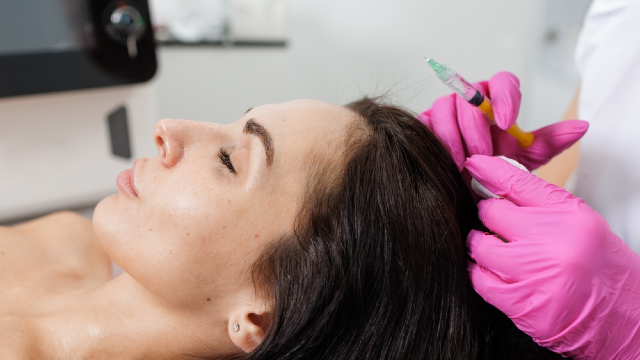
Hair Follicle Botox Injection: An Alternative Approach to Scalp Health
Medically reviewed by Dr. Hyunju Kim, Medical Director, Mason Clinic
Most people associate botulinum toxin—commonly known by the brand name Botox—with smoothing frown lines or easing certain medical conditions. Less familiar is its use on the scalp. Hair Follicle Botox Injection is a treatment offered at Mason Clinic in Seoul that applies scalp injections to target the scalp muscle layer, with the stated goals of reducing scalp tension, balancing the scalp environment, and supporting healthier conditions for the hair root. It takes a different route from regenerative hair treatments, and it comes with an important regulatory caveat for readers in the United States: using botulinum toxin for the scalp or hair is an off-label use that is not FDA-approved for this purpose. This article explains how the treatment is described, who it may suit, how it differs from the clinic's regenerative options, and what its limits are. It is educational and is not a self-diagnosis tool.
What Hair Follicle Botox Injection Is
Mason Clinic describes Hair Follicle Botox Injection as a non-surgical scalp treatment that aims to improve the hair-root environment through precise scalp injections. Rather than being placed to address facial expression lines, the injections here focus on the scalp muscle layer. The intended effects, as the clinic states them, are reducing scalp tension, balancing the scalp environment, and supporting healthier hair growth conditions.
The underlying idea is about the environment around the hair root rather than direct stimulation of the follicle to grow hair. By targeting the scalp muscle layer, the treatment is positioned to ease excessive scalp tension and to help balance factors such as sebum activity that influence the scalp. It is described as non-surgical with minimal interruption to daily activities.
It is important to frame this accurately from the start: this is a use of botulinum toxin that differs from the indications the product is approved for in the United States. We cover that in detail below, because for US readers it is central to making an informed decision.
Regulatory Status: Off-Label and Not FDA-Approved for Scalp or Hair
Botulinum toxin is an FDA-approved product, but approval is always tied to specific indications—the particular medical uses the FDA has reviewed and cleared. According to the FDA-approved labeling, botulinum toxin's approved cosmetic and therapeutic indications include the temporary improvement of glabellar (frown) lines, severe underarm sweating (severe primary axillary hyperhidrosis), and chronic migraine, along with certain other therapeutic uses.
The scalp and hair are not among those FDA-approved indications. Using botulinum toxin to treat the scalp or to influence hair is therefore an off-label use. "Off-label" means a licensed product is being used for a purpose other than one the FDA has specifically approved. It is a common practice in medicine, but it is not the same as FDA approval for that purpose, and it is important that patients understand the distinction.
In plain terms: using Botox for the scalp or hair is off-label and is not FDA-approved for this use. Hair Follicle Botox Injection is offered at Mason Clinic in Seoul under the local regulatory framework that applies there; its availability there does not imply US approval for scalp or hair use. The effects of botulinum toxin are temporary, results vary from person to person, and no specific outcome can be guaranteed. This article does not promise hair growth. Anyone considering the treatment should discuss the off-label nature, the temporary effect, and the potential risks directly with the treating physician before proceeding.
How the Treatment Approaches Scalp Health
The mechanism Mason Clinic describes centers on the scalp muscle layer and the environment around the hair root, rather than on regenerating follicles.
By targeting the scalp muscle layer, the treatment is intended to reduce scalp muscle tension. Excessive tension in the scalp is one of the factors the clinic associates with a less favorable environment for the hair root. Alongside that, the treatment is described as aiming to reduce excessive sebum activity and to improve overall scalp balance. The clinic frames the benefits it lists—an improved scalp environment, reduced scalp muscle tension, reduced excessive sebum activity, better hair-root stability, improved scalp balance, and support for healthier hair quality—as goals of the treatment, delivered non-surgically with minimal interruption to daily life.
It is worth underlining what this framing implies. The treatment is presented as working on the conditions around the hair rather than as a direct hair-growth stimulant. That is a meaningful distinction from regenerative approaches, and it is one reason the clinic groups these as separate services rather than as versions of the same thing.
The Diagnostic-First Workflow and Comfort Measures
Mason Clinic emphasizes a diagnostic-first approach across its treatments, and its hair and scalp services are described in the same terms. For Hair Follicle Botox Injection, the clinic states that it performs an individual scalp assessment before treatment, uses controlled micro-injection techniques, and provides personalized treatment planning to support accurate product placement and procedural consistency.
The clinic's broader practices apply here as well: a physician-led consultation is available, and the clinic emphasizes individual scalp assessment and precision scalp injections within a structured medical treatment system. The stated focus is on improving the scalp environment rather than only the cosmetic appearance of hair. Mason Clinic also describes general practices intended to support a safe and transparent experience, including private care, professional handling of materials, and a treatment planning process tailored to the individual.
On comfort, the clinic notes that patients are generally able to return to normal daily activities without prolonged downtime, consistent with how botulinum toxin injections are handled more broadly. Specific comfort and aftercare details for an individual patient are set during consultation. Aftercare guidance the clinic describes includes general scalp care, avoiding unnecessary stress on the treated areas immediately after treatment, and follow-up monitoring when appropriate, with longer-term scalp management as needed.
Who May Be a Candidate
According to the clinic's materials, Hair Follicle Botox Injection may be considered for people with:
- Reduced hair strength and weakened hair roots.
- Hair thinning.
- Reduced hair density.
- Excessive scalp tension.
- A scalp affected by heat, UV exposure, or stress.
- A poor follicle-support environment.
The clinic frames these as reasons a person might explore the treatment, not as a checklist that guarantees suitability. Who should avoid or postpone treatment is something the clinic determines individually rather than publishing as a fixed list. If you are pregnant or breastfeeding, have a neuromuscular condition, take certain medications, or have any other health consideration, those are matters to raise with the physician. Botulinum toxin is a prescription product whose use is indication- and patient-specific, and a personal medical evaluation is the only appropriate way to decide whether this off-label scalp use is reasonable for you.
Realistic Expectations, Temporary Effects, and Risks
Two features of botulinum toxin shape realistic expectations. First, its effects are temporary; the action of botulinum toxin wears off over time, which is why treatments in general are repeated. Second, results vary between individuals, and no specific result can be guaranteed. The clinic's materials do not promise hair growth, and neither does this article.
Because several specifics for this treatment are listed by the clinic as "Needs Clinic Confirmation"—including detailed side effects, risks, and how long any effect lasts—these are exactly the questions to bring to the physician. As a general matter, injection-based treatments can involve injection-site effects such as redness, swelling, bruising, or tenderness, and botulinum toxin carries its own considerations that a physician will review with you based on your health history. The clinic states that it reduces risk through an individual scalp assessment before treatment, controlled micro-injection techniques, and personalized treatment planning. These measures support careful delivery but do not eliminate risk.
For US readers, the off-label status is part of the overall picture to weigh. Because the scalp is not an FDA-approved indication for botulinum toxin, the regulator-reviewed evidence base you might expect for an approved use is not present for this application. That is a reason to ask detailed questions and to make the decision with a physician rather than on assumptions.
How It Differs From the Clinic's Regenerative Hair Treatments
A key point for anyone comparing options is that Hair Follicle Botox Injection is mechanistically different from Mason Clinic's regenerative hair treatments, and the clinic itself draws this distinction.
Hair Follicle Botox Injection focuses on reducing scalp tension, balancing sebum activity, and improving the hair-root environment through scalp muscle injections. By contrast, M Cell Hair Conditioning is a regenerative scalp treatment that supports follicle regeneration through cellular repair mechanisms, using an autologous, tissue-based M CELL solution delivered by micro-injection. ASCE+ HRLV is another distinct approach, an injection-based treatment using a regenerative ASCE+ formula that is marketed as exosome-based; that treatment carries its own separate regulatory considerations, as no exosome product is FDA-approved in the US. The Alopecia Areata Injection is a customized approach for immune-related, inflammatory hair loss.
In short, these are not interchangeable services. Hair Follicle Botox Injection works on the scalp muscle layer and the surrounding environment, while the regenerative options work through different biological mechanisms. Which one—if any—is appropriate depends entirely on an individual evaluation, and the clinic frames the choice as a doctor-led decision made after assessing the scalp.
Bottom Line
Hair Follicle Botox Injection is a non-surgical scalp treatment offered at Mason Clinic in Seoul that targets the scalp muscle layer to reduce scalp tension, help balance sebum, and support the hair-root environment, within a diagnostic-first workflow. For US patients, the defining fact is regulatory: botulinum toxin is FDA-approved for indications such as glabellar lines, severe underarm sweating, and chronic migraine, but the scalp and hair are not FDA-approved indications, so this is an off-label use that is not FDA-approved for this purpose. The effects are temporary, results vary and cannot be guaranteed, and no hair growth is promised. It differs in mechanism from the clinic's regenerative M Cell and ASCE+ hair treatments. The appropriate next step is an individualized conversation with a physician about the off-label nature, the limits, and the risks. This article is educational and is not a self-diagnosis tool.
Frequently Asked Questions
**Who is generally considered a candidate for Hair Follicle Botox Injection?**The clinic lists possible candidates as people with weakened hair roots, reduced hair thickness or density, excessive scalp tension, a scalp affected by heat, UV exposure or stress, and those seeking a non-surgical option to support scalp health after a medical evaluation. Suitability is confirmed individually by a doctor.
**Is using Botox on the scalp FDA-approved?**No. Botulinum toxin is FDA-approved for indications such as glabellar lines, severe underarm sweating, and chronic migraine, but not for the scalp or hair. Using it for the scalp is an off-label use that is not FDA-approved for this purpose. The treatment is offered in Seoul under local regulation.
**Will it make my hair grow?**No hair growth is promised. The treatment is described as targeting the scalp muscle layer to reduce tension and support the hair-root environment, not as a direct hair-growth stimulant. Results vary, effects are temporary, and no outcome can be guaranteed.
**How is it different from M Cell Hair Conditioning or ASCE+ HRLV?**Hair Follicle Botox Injection works on the scalp muscle layer and the surrounding environment. M Cell Hair Conditioning supports follicle regeneration through cellular repair using the patient's own tissue-based material, and ASCE+ HRLV uses a regenerative, exosome-marketed formula. They work by different mechanisms, and a physician can advise which, if any, suits you.
**Is there downtime?**The clinic describes it as a non-surgical treatment designed to let patients return to normal daily activities without prolonged downtime. Patients are advised to avoid unnecessary stress on the treated scalp immediately after the procedure and to follow the clinic's scalp-care instructions.
**Can I consult before traveling to Seoul?**Yes. The clinic states that an online consultation is possible and that an English-speaking team is available, which can help patients prepare for an in-person scalp assessment before deciding on treatment.
Disclaimer
This article is for general educational purposes only and is not medical advice, a diagnosis, or a self-diagnosis tool. It does not establish a doctor–patient relationship. Candidacy for any scalp treatment requires an in-person consultation and scalp assessment. Regulatory status differs by country: Hair Follicle Botox Injection is offered in Seoul under local regulation, and using botulinum toxin for the scalp or hair is off-label and not FDA-approved for this use in the United States. The effects of botulinum toxin are temporary, results vary and cannot be guaranteed, and no hair growth is promised. Discuss the potential benefits and risks with a qualified physician before making any decision.
Clinical Safety Notice & Personalized Consultation
All treatments across Mason Clinic's specialized clinical centers are planned after a 1:1 consultation with our attending physicians. Individual outcomes vary depending on skin anatomy and condition. Possible post-procedure effects include temporary redness, swelling, bruising, tenderness, or infection.
Request a 1:1 ConsultationClinical Safety Notice & Personalized Consultation
All treatments across Mason Clinic's specialized clinical centers are planned after a 1:1 consultation with our attending physicians. Individual outcomes vary depending on skin anatomy and condition. Possible post-procedure effects include temporary redness, swelling, bruising, tenderness, or infection.
Request a 1:1 Consultation