1:1 Consultation
Alopecia Areata Injection: Treating Autoimmune Hair Loss at Mason Clinic
Alopecia Areata Injection at Mason Clinic in Seoul for immune-related, patchy hair loss: who it may suit, and why results vary and are not guaranteed.
Mason Clinic · Medical Editorial & Clinical Insight
1:1 Consultation →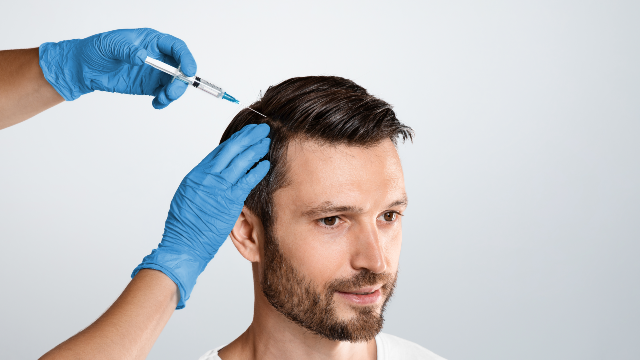
Alopecia Areata Injection: Treating Autoimmune Hair Loss at Mason Clinic
Medically reviewed by Dr. Hyunju Kim, Medical Director, Mason Clinic
Not all hair loss is the same. The gradual, patterned thinning that many people associate with age or genetics is a different problem from the sudden, patchy loss that appears when the immune system turns against the hair follicle. That second pattern is alopecia areata, an autoimmune condition, and it calls for a different kind of care. Alopecia Areata Injection is a customized, non-surgical scalp treatment offered at Mason Clinic in Seoul that is designed to address immune-related hair loss associated with inflammation and immune imbalance. This article explains what the treatment is, how the clinic describes its approach, who it may be considered for, and—importantly for readers in the United States—the medical and regulatory context that every patient should understand before making a decision. It is educational and is not a self-diagnosis tool.
What Alopecia Areata Is
Alopecia areata is a condition in which the body's own immune system attacks the hair follicles, causing hair to fall out. It commonly shows up as one or more round or oval bald patches, most often on the scalp, though it can affect other areas where hair grows. It can begin at almost any age, and the course is unpredictable: some people see hair return on its own, some experience repeated cycles of loss and regrowth, and others have more extensive or persistent loss.
The essential feature to understand is that alopecia areata is autoimmune and inflammatory. The follicles themselves are generally not destroyed; instead, immune-driven inflammation around the follicle pushes hairs into a resting state and interrupts normal growth. This is why the goal of medical treatment is usually to calm that inflammation and encourage the follicles to re-enter their natural growth cycle, rather than to transplant or replace hair.
It also matters that alopecia areata is a medical condition with no known cure. Treatments are aimed at helping hair regrow and at managing the condition over time; they do not permanently switch off the underlying autoimmune tendency. Because the condition behaves differently from person to person, it should be diagnosed and managed by a physician who can evaluate the specific pattern, activity, and extent of the hair loss.
What Alopecia Areata Injection Is
Mason Clinic describes Alopecia Areata Injection as a customized, non-surgical scalp treatment designed to address immune-related hair loss associated with inflammation and immune imbalance. In this approach, medication is injected directly into the affected scalp areas. The stated aims are to regulate inflammation, to help restore immune balance in the treated areas, and to support the return of resting hair follicles to the active growth phase.
The logic follows directly from how alopecia areata works. Because the problem is driven by localized immune activity and inflammation around the follicles, delivering an anti-inflammatory or immune-modulating medication into those specific areas is intended to ease the inflammatory environment that is keeping hairs in a resting state. As the clinic frames it, this is a targeted, localized treatment rather than a systemic one, focused on the patches where hair loss is active.
An important point of transparency: the clinic's materials describe the treatment in terms of an anti-inflammatory, immune-modulating medication delivered into the scalp, but they do not name a specific drug for this article. As general dermatology context, intralesional corticosteroid injection—injecting a corticosteroid directly into a bald patch—is a recognized and commonly used approach for patchy alopecia areata, and it is one of the standard options physicians discuss for this condition. That general context should not be read as a statement of exactly which medication Mason Clinic uses; the specific medication, dose, and plan are matters to confirm directly with the treating physician during consultation.
How the Treatment Is Intended to Work
The mechanism the clinic describes centers on the inflamed, immune-active environment around resting follicles.
By placing medication into the affected scalp areas, the treatment is intended to regulate the local inflammation that accompanies alopecia areata. Reducing that inflammation is meant to improve the environment around the follicle so that follicles which have shifted into a resting (telogen) phase have a better opportunity to return to active growth. The clinic lists the goals of the treatment as supporting immune balance, reducing inflammation, improving the follicle environment, and encouraging gradual hair regrowth—while stating plainly that results vary.
It is worth being precise about expectations here. Where regrowth occurs, it tends to develop gradually as inflammation decreases and follicles return to the natural growth cycle. This is not an overnight change, and it is not guaranteed. The treatment is presented as a way to support the conditions for regrowth in an autoimmune, inflammatory setting—not as a cure for the condition and not as a promise that hair will return.
The Consultation and Diagnostic Process
Mason Clinic emphasizes a diagnostic-first approach, and Alopecia Areata Injection is described in the same terms. The process begins with a doctor consultation and a scalp examination. During this stage, the clinic assesses the location of hair loss, the degree of inflammatory activity, and other individual factors, and then develops a personalized treatment plan based on those findings.
The patient-friendly sequence the clinic outlines is: consultation, then scalp assessment, then localized micro-injections, followed by observation, a follow-up evaluation, and ongoing scalp monitoring. This structure reflects the reality that alopecia areata is a changeable condition that benefits from being tracked over time rather than treated once and forgotten. The clinic frames continuous monitoring as part of supporting longer-term care, with follow-up shaped by how an individual responds.
On the technology and technique side, the clinic describes the use of a precision micro-injection technique, localized scalp injection, targeted medication delivery, and structured clinical monitoring. In practical terms, that means the medication is intended to be placed carefully into the specific areas identified during assessment, with the response reviewed over subsequent visits.
Who May Be a Candidate
According to the clinic's materials, Alopecia Areata Injection may be considered for people with:
- Alopecia areata (patchy hair loss).
- Immune-related hair loss.
- Inflammatory scalp conditions affecting hair growth.
- Resting (telogen phase) hair follicles that require stimulation.
The clinic describes candidacy as something determined individually. In its own words, a good candidate is someone experiencing alopecia areata—an immune-mediated condition that causes sudden, patchy hair loss—whose situation calls for a clinically informed, individualized approach, with the injection protocol tailored to the specific pattern and affected areas. In other words, these points describe who might explore the treatment, not a checklist that guarantees suitability.
Who should avoid or postpone treatment is not published as a fixed list; it is decided during a personal evaluation. This is exactly why an in-person assessment matters. If you are pregnant or breastfeeding, take certain medications, or have other health conditions, those are considerations to raise with the physician. Because alopecia areata should be diagnosed and managed by a physician, and because a correct diagnosis is the foundation of any treatment plan, the decision to proceed—and with which medication—belongs to a doctor who has examined your scalp.
The Regulatory Picture for US Readers
For patients in the United States, a few points of context are important, and it is worth stating them plainly.
First, alopecia areata is an autoimmune condition with no cure. Any legitimate treatment aims to help regrowth or to manage the condition; none permanently resolves the underlying autoimmune process. Be cautious of any messaging anywhere that suggests otherwise.
Second, the treatment landscape for alopecia areata has expanded in recent years. As general context, the US Food and Drug Administration has approved several oral JAK inhibitor medications for severe alopecia areata: baricitinib (Olumiant) in 2022, ritlecitinib (Litfulo) in 2023, and deuruxolitinib (Leqselvi). These are prescription systemic medications approved for severe disease, and they are mentioned here only to give an accurate view of the wider medical picture. Their existence does not mean Mason Clinic offers these particular medications, and it should not be read that way. Alopecia Areata Injection as described here is a localized scalp injection, and nothing in the clinic's materials states that it is an FDA-approved treatment. It is offered in Seoul under the local regulatory framework that applies there.
Third, because the specific medication used in the clinic's injection is not named in these materials, and because the right approach depends on the individual, the correct next step is a conversation with a physician about the diagnosis, the options, the medication, and the risks. Results vary from person to person, regrowth is not guaranteed, and this article does not promise hair growth.
Recovery, Realistic Expectations, and Risks
Because Alopecia Areata Injection is non-surgical, recovery is generally described as minimal. The clinic states that most patients are able to resume daily activities soon after treatment, with guidance from the doctor, and that same-day treatment is usually possible. Follow-up visits depend on how a person responds and on the doctor's recommendation.
On expectations, the clinic is measured. Where regrowth happens, it develops gradually as inflammation decreases and follicles return to their natural growth cycle. The listed benefits—supporting immune balance, reducing inflammation, improving the follicle environment, and encouraging gradual hair regrowth—are framed as goals, with the explicit caveat that results vary.
On risks, the clinic notes that temporary injection discomfort, redness, or tenderness may occur, and that individual risks are discussed during the consultation. Several treatment specifics—such as detailed side effects, longer-term risks, and the timing of any final result—are matters the clinic reviews individually rather than publishing as fixed figures, which makes them exactly the questions to bring to the physician. As a general matter, any injection-based treatment can involve injection-site effects, and the particular medication used carries its own considerations that a doctor should review against your health history. The clinic states that personalized injection planning, precise diagnosis, targeted treatment, and continuous monitoring are part of how it supports careful, longer-term care—measures that support thoughtful delivery without eliminating risk.
How It Fits Alongside Other Hair and Scalp Options
Alopecia Areata Injection is aimed specifically at immune-related, inflammatory hair loss, which sets it apart from treatments designed for other causes of thinning. Mason Clinic notes that, depending on the diagnosis, alternative or complementary options may include M Cell Hair Conditioning, Hair Follicle Botox Injection, and ASCE+ HRLV, and that combination approaches may be considered according to scalp condition, immune activity, and individualized planning.
The practical takeaway is that these are not interchangeable services. Alopecia areata is an autoimmune condition, and the injection described here is oriented toward calming immune-driven inflammation in the affected patches. Treatments developed for other scalp or hair-loss concerns work through different mechanisms and are appropriate for different situations. Which approach—if any—fits a given person depends entirely on an accurate diagnosis and an individual evaluation by a physician.
Bottom Line
Alopecia Areata Injection is a customized, non-surgical scalp treatment offered at Mason Clinic in Seoul for immune-related, inflammatory hair loss. Medication is injected into affected scalp areas with the goals of regulating inflammation, supporting immune balance, and helping resting follicles return to the growth phase, delivered through a diagnostic-first workflow of consultation, scalp assessment, localized micro-injections, observation, and follow-up monitoring. For US readers, the essential context is that alopecia areata is an autoimmune condition with no cure; treatments aim to help regrowth rather than eliminate the underlying process. The FDA has approved oral JAK inhibitors (baricitinib/Olumiant, ritlecitinib/Litfulo, deuruxolitinib/Leqselvi) for severe alopecia areata as part of the wider picture, but that does not mean the clinic offers those medications, and the clinic's injection is not described as FDA-approved. The specific medication used is a matter to confirm with the physician; intralesional corticosteroid injection is a recognized, commonly used approach for patchy alopecia areata as general context only. Results vary, regrowth is not guaranteed, and this article does not promise hair growth. The right next step is to have alopecia areata diagnosed and managed by a physician. This article is educational and is not a self-diagnosis tool.
Frequently Asked Questions
**Who is generally considered a candidate for Alopecia Areata Injection?**The clinic lists possible candidates as people with alopecia areata (patchy hair loss), immune-related hair loss, inflammatory scalp conditions affecting hair growth, and resting-phase follicles that require stimulation. It describes a good candidate as someone with immune-mediated, patchy hair loss whose situation calls for an individualized approach. Suitability is confirmed by a doctor after examination.
**Is alopecia areata curable, and will this treatment cure it?**No. Alopecia areata is an autoimmune condition with no known cure. Treatments, including this injection, aim to help regrowth and manage the condition rather than cure it. Results vary between individuals, and regrowth cannot be guaranteed.
**Is the injection FDA-approved?**The clinic's materials do not describe Alopecia Areata Injection as FDA-approved; it is offered in Seoul under local regulation. Separately, and as general context, the FDA has approved oral JAK inhibitors (Olumiant, Litfulo, Leqselvi) for severe alopecia areata—those are different, systemic prescription medications and are not stated to be what the clinic offers.
**What does recovery look like?**The clinic describes recovery as usually minimal. Same-day treatment is generally possible, and most patients resume daily activities soon after treatment with the doctor's guidance. Follow-up visits depend on how you respond and on the doctor's recommendation.
**When might I see results?**Where regrowth occurs, the clinic states it develops gradually as inflammation decreases and follicles return to the natural growth cycle. It is not immediate and is not guaranteed. Ongoing scalp monitoring helps the clinic track your individual response over time.
**Can I consult before traveling to Seoul?**Yes. The clinic states that online consultation is possible and that an English-speaking team is available. It also notes that remote follow-up support is available for international patients if a concern arises after returning home.
Disclaimer
This article is for general educational purposes only and is not medical advice, a diagnosis, or a self-diagnosis tool. It does not establish a doctor–patient relationship. Alopecia areata is a medical, autoimmune condition that should be diagnosed and managed by a physician, and candidacy for any scalp treatment requires an in-person consultation and scalp assessment. Regulatory status differs by country: Alopecia Areata Injection is offered in Seoul under local regulation and is not described as FDA-approved; alopecia areata has no cure, and treatments aim to help regrowth. Results vary from person to person, regrowth cannot be guaranteed, and no hair growth is promised. Discuss the potential benefits, the specific medication, and the risks with a qualified physician before making any decision.
Clinical Safety Notice & Personalized Consultation
All treatments across Mason Clinic's specialized clinical centers are planned after a 1:1 consultation with our attending physicians. Individual outcomes vary depending on skin anatomy and condition. Possible post-procedure effects include temporary redness, swelling, bruising, tenderness, or infection.
Request a 1:1 ConsultationClinical Safety Notice & Personalized Consultation
All treatments across Mason Clinic's specialized clinical centers are planned after a 1:1 consultation with our attending physicians. Individual outcomes vary depending on skin anatomy and condition. Possible post-procedure effects include temporary redness, swelling, bruising, tenderness, or infection.
Request a 1:1 Consultation